• Sample Page

A bike ride around the world

  • Crossing the finish line in Almaty

    1 Aug 2025

    At just before 6pm on Wednesday evening, Thomas and I crossed the finish line of our ride across Kyrgyzstan and Kazakhstan. I’d chosen Ascension Cathedral as the end point – a famous Almaty landmark and somewhere that was likely to give us a sense of occasion. It didn’t disappoint, and waves of emotion washed over me as we cycled the final few metres to the steps below its main door. Huge pride in what we had achieved. Overwhelming satisfaction that I’d reached this place almost entirely under my own pedal power from home.

    I’ve tried to ride every kilometre I could from home to here in order to create as near a continuous route as possible. The connections between the place I live and the world I discover from converting wanderlust into progress around the globe matter to me. There have been some enforced exceptions on a journey that’s now almost a third of the way around the world in its fruition; I had to cross the English Channel and the Caspian Sea by boat and by plane respectively, I had to catch a train across the Kazakh/Uzbek border because of its closure to all road traffic, and last week’s landslide in Kyrgyzstan led to our taking a car ride to avoid a 600-kilometre diversion. But apart from those interruptions, I’ve made the journey from Sussex to Almaty entirely by bicycle.

    It’s been a journey of 83 days, 6,091 miles, 9,866 kilometres, across 14 countries, with 77,267 metres (253,500 feet) of vertical elevation.
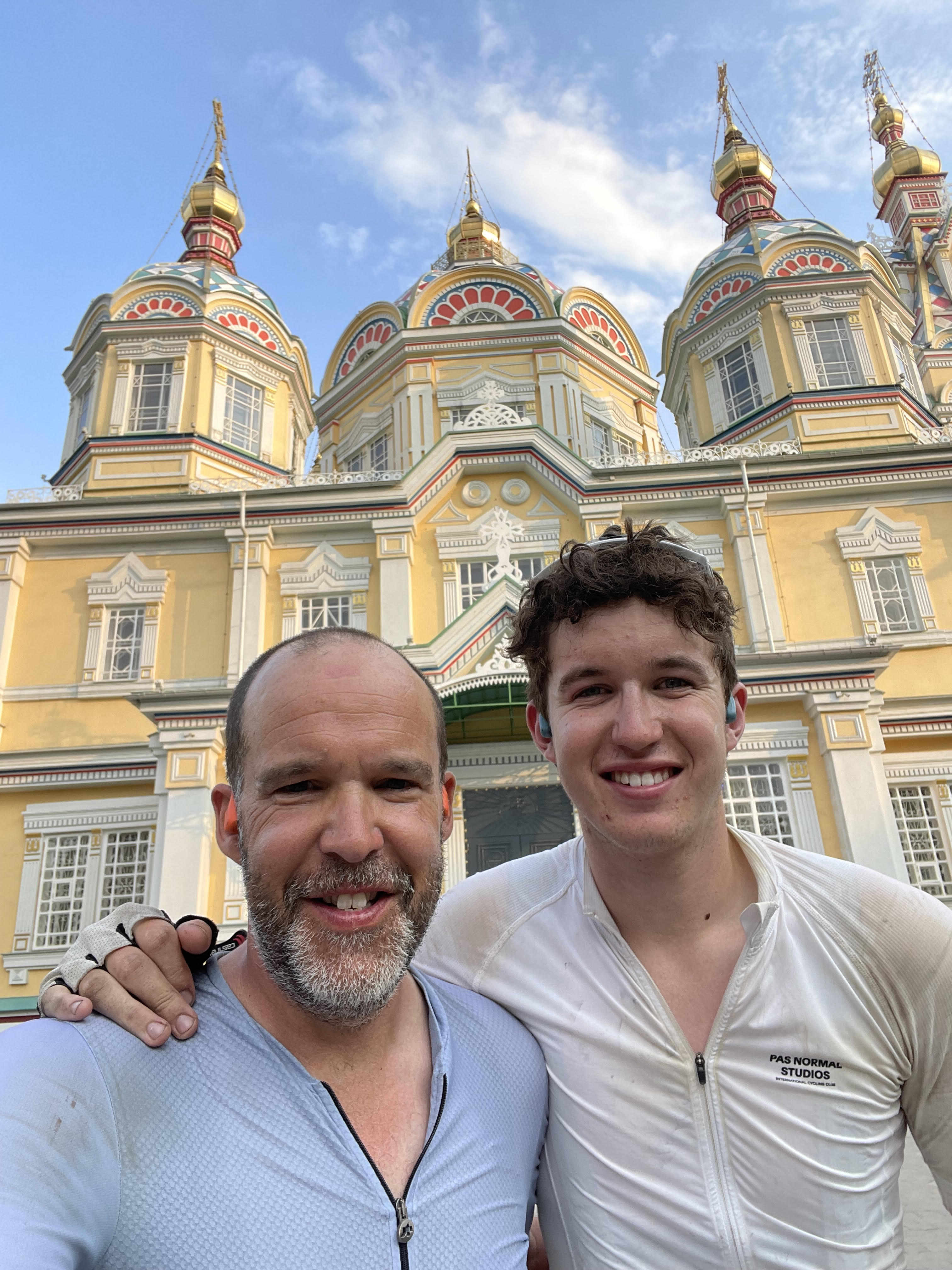
    Arriving at the finish line – Ascension Cathedral in Almaty, Kazakhstan

    Our ride of 246 kilometres through this eastern part of Kazakhstan from Kegen to Almaty (split across two days) felt at times like a mirror of the ride I did through the west of this vast country, whose land mass is equivalent in size to the whole of western Europe, in May. The remoteness, the absence of shops and civilisation, and the need to wild camp and focus on the basics of survival (in particular sourcing water) had loud echoes of my adventure through the western Kazakh desert some 26 cycling days previously. With the remoteness and the rawness of the experience comes something mystical and deeply rewarding – an adventure sharpened by the imperative to focus on the few simple but vital things required to shape our journey (and keep us functioning!).

    The distance we had to cover across our last two days was eminently feasible (and consistent with our daily kilometrage on the other days of this ride), but the temperature built on the day north from Kegen to 37c, a headwind that announced itself that day only grew in intensity and irritance the following morning, and the road surface was highly changeable and in places very difficult to traverse. Cyclists talk about ‘grippy’ roads, and grippiness makes such a difference to the power output required to cover a given distance. At times, a broken or bumpy road surface can feel like a quagmire drawing one in to its inner reaches. Combined with the invisible foe of a strong headwind, the riding conditions over the final two days of our ride were often draining.  

    For the penultimate night of our ride, we would have accepted a camping solution a lot less appealing than the one that presented itself to us within a short distance of the start of the swathe of land that we’d earmarked for finding a spot. It was magical – alongside a fast-flowing chalky river in which we washed ourselves (just about avoiding cold-water shock!) and our kit. We pitched our tents on relatively flat ground, and tried to see off a large army of midges with liberal application of Jungle Formula. We cooked on our Trangia – some delicious and very spicy ramen noodles, and then pasta with tuna and cheese. With culinary expectations realistically low, it turned out to be a very satisfying supper!
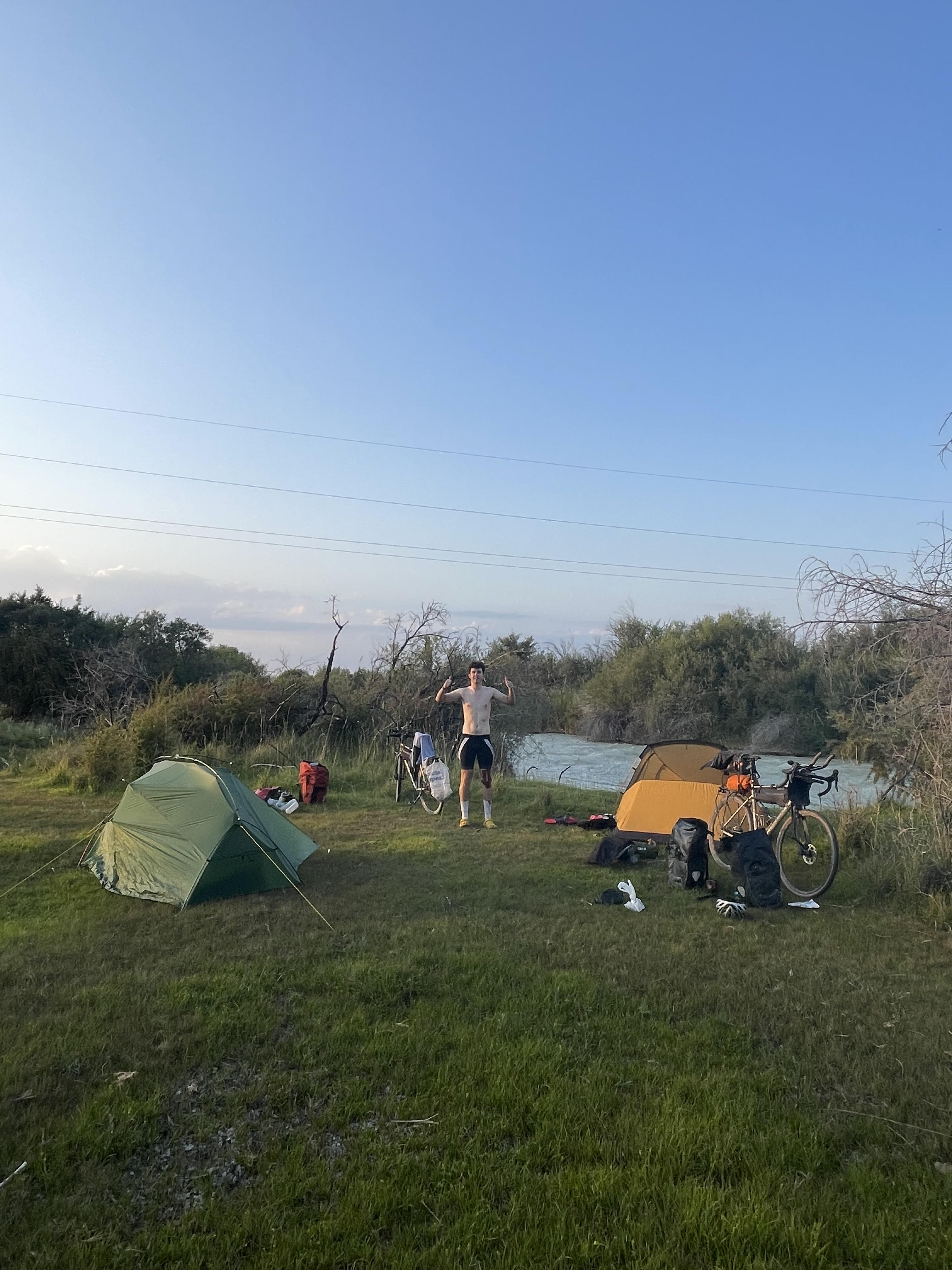
    Our idyllic camping spot midway between Kegen and Almaty

    Lying in my tent beneath the stars following an early sunset (given Kazakhstan’s adoption of a universal time zone which brings an early start and an early end to the day in the eastern areas of the country), I reflected on our adventure (and on the wider arc of my ride from home to here across 83 days on my bike). An adventure like this yields incredible moments – some planned, some serendipitous, and so many of them are the basis for memories that not just last a lifetime, but shape a lifetime.

    Those moments are so often synonymous with the people who colour them. There are the remarkable people whose own adventures provide untold inspiration and kinship – a vibrant community of cyclists who criss-cross the planet carrying their hopes, dreams and idiosyncrasies. Borne of different life stories. But all united in a love of this world, a desire to achieve something tangible, and on the whole finding great pleasure in celebrating the rich tapestry of people they encounter as they make their way around the planet. It was fun to meet Steve from Wales as he took a break on the Koldomo Pass, and to hear him tell us that he’s riding “from Wales to Wales”! We met Kate Leeming, an Australian extreme endurance cyclist and explorer, in Kyrgyzstan on her epic ride along the course of the Naryn River in aid of water.org; and we crossed paths with cyclists from Czechia, Switzerland, France, Ecuador and Japan as they turned the pedals in pursuit of their own unique goals.

    And then there are the people whose lives couldn’t be much more different from our own, but our interactions with whom have been as life-enhancing as any. The man who gave me a thumbs up and a smile as we headed in to Bokonbayevo at the end of a long and arduous day in the saddle will never know what a shot in the arm it was to feel his warmth and encouragement. There have been one or two exceptions to the almost universal affection we’ve been shown – including, disappointingly, a couple of truck drivers who seemed indignant at our presence on their roads in eastern Kazakhstan and appeared to try to drive us off the road, with horns that on almost every other occasion throughout Central Asia have been blasted supportively being used in a much more hostile way. But they have been huge exceptions. Time and again, we’ve been shown great kindness and respect, with so many gracious strangers wanting to know what they could do to help us.

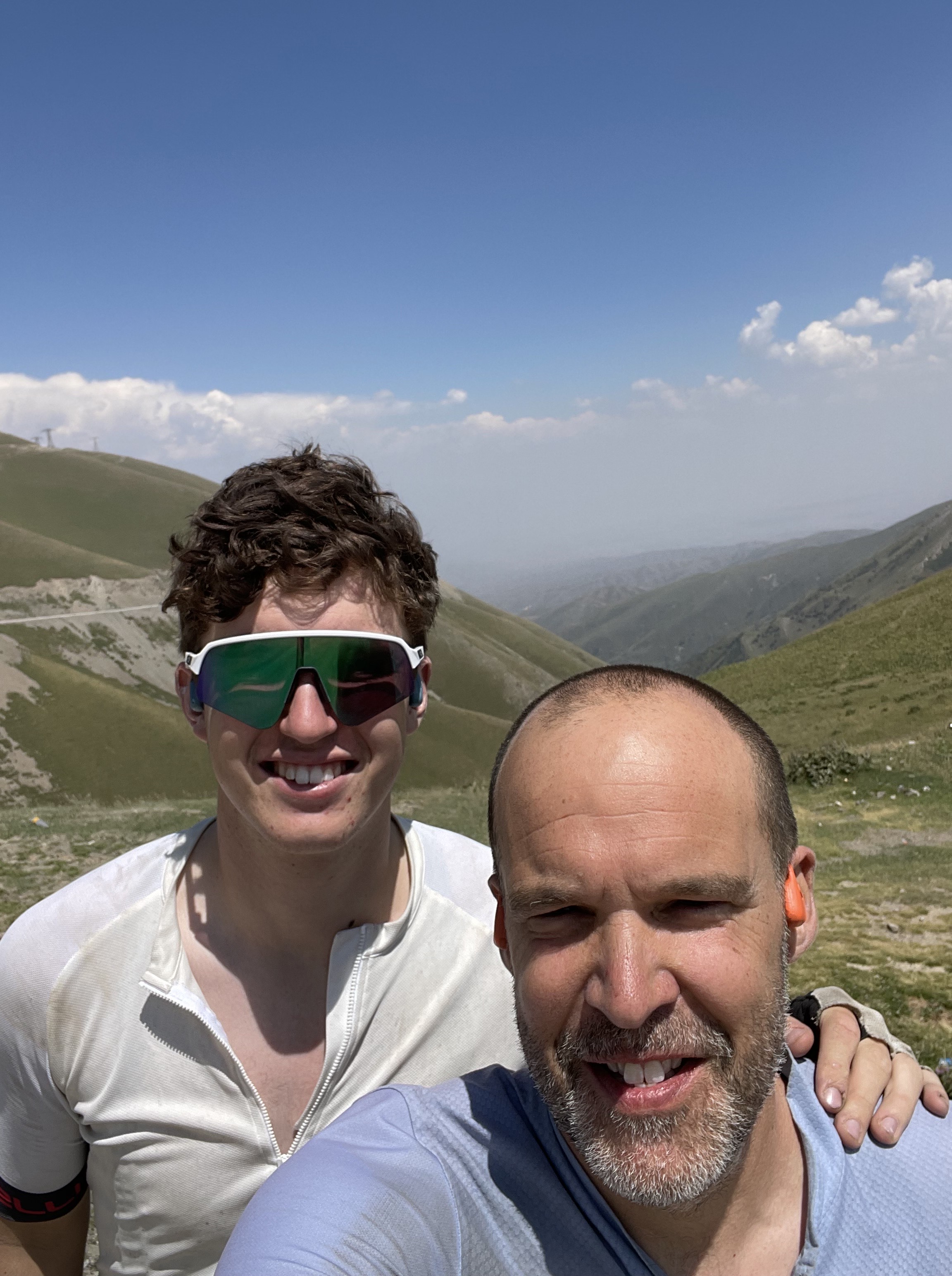
    And one person has shaped this adventure more than any other. Riding with Thomas has been unbridled joy. Being a father and son out on the road together, united in our determination to do something special, has been one of the great privileges of my life. I’ll never forget it, and I’ll never take for granted the opportunity to have experienced the very best of life. 
  • The pendulum of a long-distance cycling adventure

    25 Jul 2025

    We weren’t meant to be sitting back in our guest house at noon on this beautiful, sunny Friday in Kazarman, but after just eight kilometres on the bikes this morning, our progress towards Chaek was brought abruptly to a stop by a landslide on the road ahead. Alongside a few locals, and Kate Leeming, an extreme endurance cyclist from Australia who’s riding the course of the Naryn River through Kyrgyzstan, Kazakhstan, Uzbekistan and Tajikistan in aid of water.org, we awaited the on-site decision of the local mayor as to whether an old, unused road could be reopened to provide a bypass. When his decision came, it was a disappointing one; and frustratingly, while he told us that he was happy to make an exception for us on our bikes…he was subsequently over-ruled by the head of the local police.

    With a natural sense of deflation, we turned around and headed back to Kazarman to regroup and make a plan for what needs to happen next. It’s easy enough to take a casual perspective on these kinds of natural events (and to assume that, unlike for vehicles, it couldn’t be too difficult for a couple of (reasonably!) fit cyclists to navigate some fallen rocks). After all, I’ve had to do that at other points on my ride from home to here. However, when we saw a video captured by a motorist who had just missed driving directly under the landslide, it transpired that this was no small-scale incident.

    The landslide ahead of us

    As I’ve said more than once through these blogs, I’m no stranger to unexpected challenges on my bike adventures, but the will to go on confronting them and solving them, while still intact, is at risk of being diminished! I’m certainly very grateful to have Thomas’s life-enhancing company (and great brainpower in finding a solution to a problem) in these circumstances; a problem shared really is a problem halved.

    I don’t know that there’s a divine order to these things, but I feel so often that, even if there isn’t a natural ‘pendulum’ to the fortunes we can justly enjoy on an adventure like this, there is value in recognising that the good times and the difficult times throw each other into relief, and the latter no doubt help us appreciate the former.

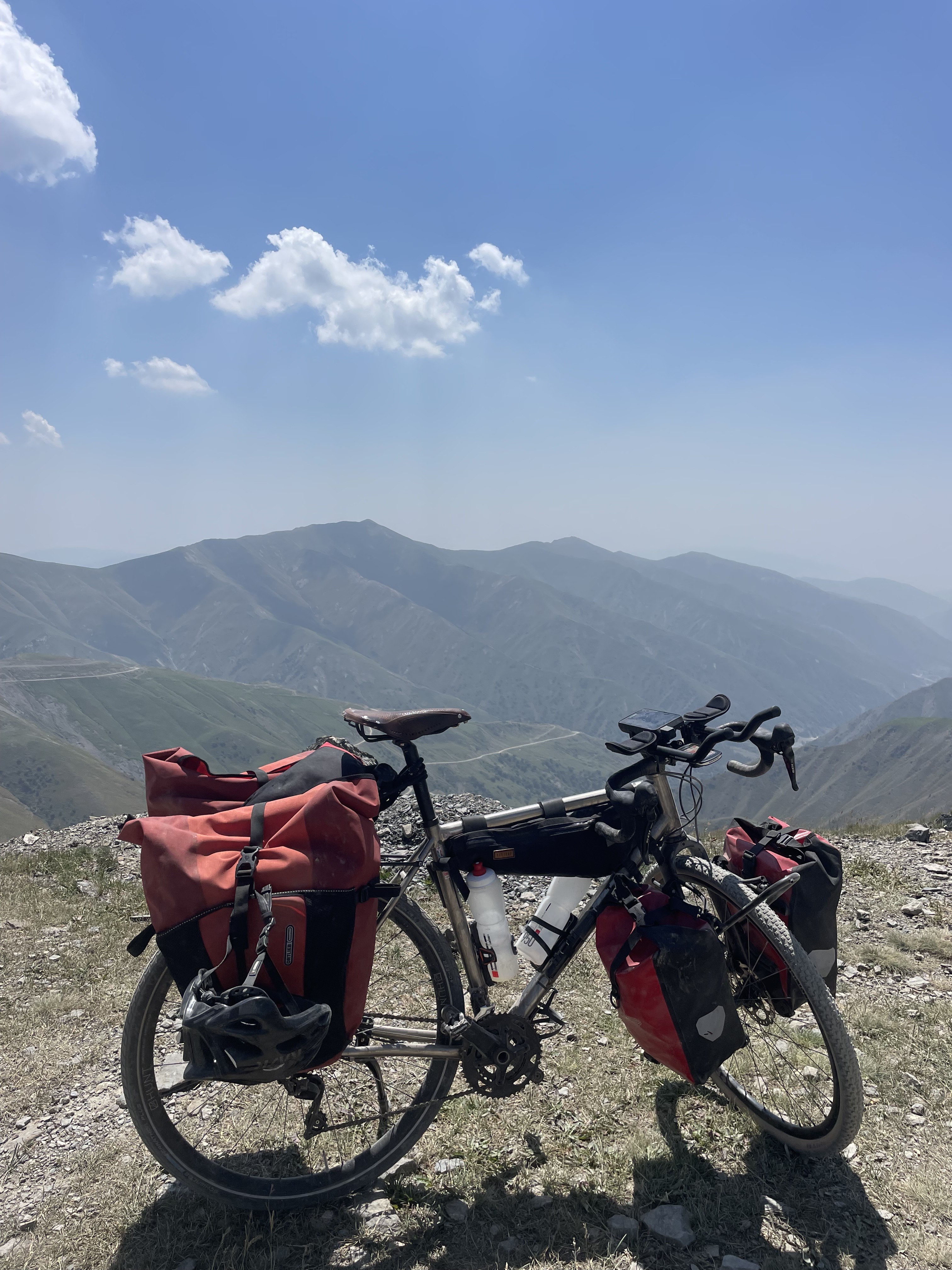
    Among the good times, it’s hard to look much further than the day we had on our bikes yesterday – a day that rendered the English language somewhat impotent when it comes to the adjectives required to describe what we saw. After a night wild camping at an idyllic spot next to a river still conveying the snow melt from a harsh, long winter (which gave us a great resource in which to swim and wash ourselves and our kit), we set off to ride the 3,000-metre Koldomo Pass, which at one point is annotated on Google Maps as being ‘the most scenic road in Kyrgyzstan’. Given that those who have travelled to this country often refer to it as “the most beautiful country on Earth”, the annotation is no trivial accolade.

    We caught up with a French cyclist, Marion, as we ground out the climb. She sat back with an “ooh la la” at one point. We just kept saying “wow”. It was a tough climb to the summit, but one utterly transfixing in its beauty. I’m fortunate to have travelled to many parts of our world (a lot of them on my bike). I haven’t seen anything more stunning than the landscape of Kyrgyzstan yesterday.

    At the top of the Koldomo Pass
    At the top of the Koldomo Pass

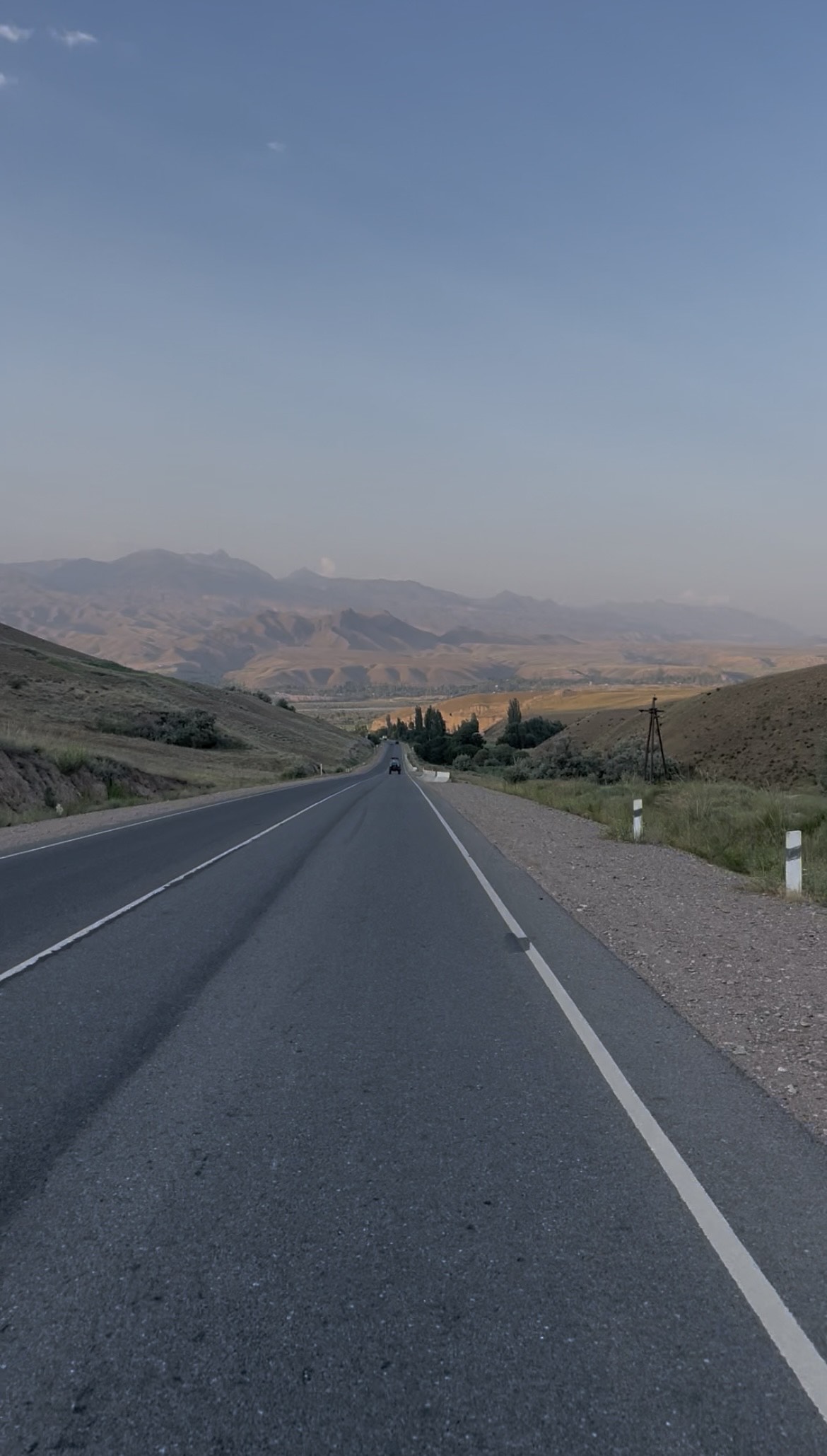
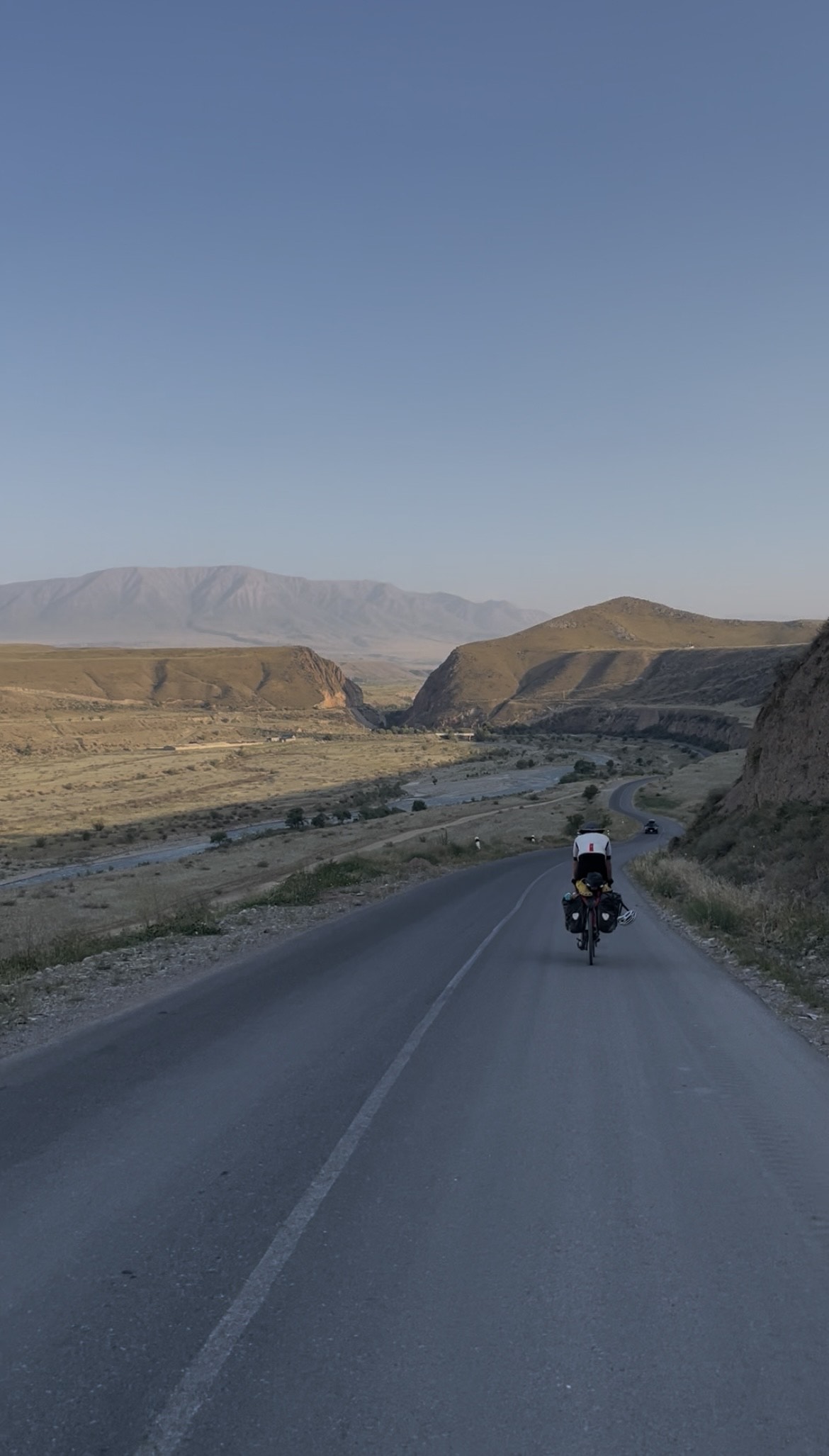
    The effortful ascent of a mountain pass like Koldomo really should foretell a descent of equal and opposite effortlessness, but it was not to be yesterday! It took us five hours to do the 52 kilometres from the peak down to Kazarman, and aside from the punctuation of a few fairly modest extra climbs along that descent, we were holding on to our brake levers for dear life. The road up and down the pass is unpaved, with alternate stretches of gravel and sand that hugely slowed our progress until a paved section emerged some 48 kilometres into those 52! But, just as on the climb, there was extraordinary beauty in everything we saw during those five hours on the way back down, not least as the golden hour threw a remarkable palette of colours and contrasts across the mountainous panorama.
    With 4km to go to Kazarman, we finally encounter some paved road!
    Heading towards Kazarman

    In terms of what lies ahead, the father of the family whose guest house we stayed in here in Kazarman last night has kindly agreed to drive us to Kochkor – the best way for us to rejoin our planned route beyond the landslide. Once more, the non-cycling logistics required to solve our challenge are denting my commitment to riding, wherever possible, a continuous route around the world; but I’ve got better at putting that dogma aside and focusing on the enjoyment that comes from living in the moment! The ride so far through Kyrgyzstan has been beyond compare, and from Kochkor onwards we’re set to have some spectacular days on the bike. It would be foolish to let a natural event far beyond our control detract from the huge pleasure in this most privileged experience.
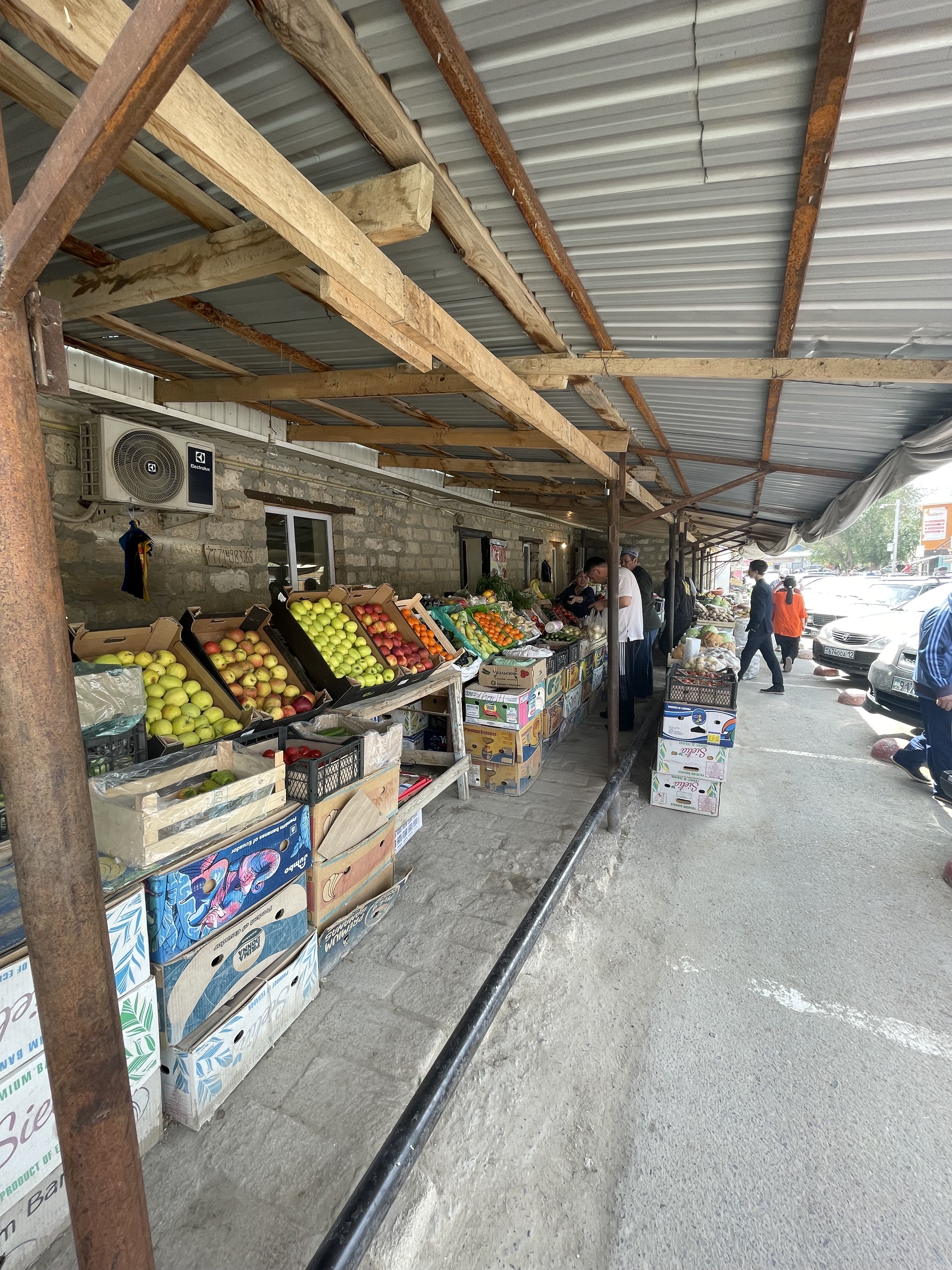
  • Osh(it)

    20 Jul 2025

    My son Thomas and I arrived safely in Osh, Kyrgyzstan’s second-largest city, yesterday morning. Unfortunately, our bikes did not. They’re enjoying an unwelcome sojourn at Istanbul’s Sabiha Gökçen airport, where we had a three-hour layover but they apparently lacked sufficient time to make the short hop from the incoming London plane to the outgoing Osh one. Standing at the baggage carousel in the airport in Osh at five o’clock on a balmy Saturday morning, it was a gut-wrenching feeling to see from checking the location of the air tag attached to my bike that it was pinging from 2,500 miles and five hours’ flying time to the west.

    I’m no stranger to challenges on these cycling adventures. During the ride I completed just seven weeks ago from Turkey to Kyrgyzstan, the closure of a key pass in the Georgian mountains enforced a three-day rerouting of my ride, I was refused permission to board a sleeper train from Baku back up to the border town of Balakan in Azerbaijan with my bike, I battled a howling headwind in the Mangystau region of Kazakhstan, I developed an infection that required antibiotics, and a crash in Uzbekistan wrecked the mountings on one of my panniers. But being bikeless is a new, and clearly pivotal, kind of challenge.

    Following a visit to the lost-and-found office at Osh Airport, and some telephone calls and WhatsApp messages with the airline, we’re assured that the bikes will arrive at some point (most probably Monday morning), but the delay is frustrating given that we should already be on the road by now in order to meet the tight schedule necessary for Thomas to be home for some commitments he has in two weeks’ time.

    The connected flights that brought us to Kyrgyzstan on Friday tracked a good part of the route that I had previously cycled out here from the UK, and I marvelled at my proximity (albeit from 33,000 feet) to so many of the places that had punctuated that route and provided respite from the toughness of my days on the bike. Most striking was to be so close to, and feel such familiarity with, places that in all likelihood I’m unlikely to pass through directly more than the once I did earlier this year. The Silk Road towns and cities, in particular, which had felt so mystical and rewarding in the context of my efforts to reach them through my own pedal power, were now laid out effortlessly below me, although just as clusters of lights in the depths of night.

    While we wait to be reunited with our bikes in Osh, the temperature is rising, with a high of 40c forecast for tomorrow. That feels intimidating, even if I know that I’ve recently overcome such intense heat in the Kyzylkum Desert of Uzbekistan. Kyrgyzstan is a country of mountains, with over 90% of its landmass covered by high mountain ranges, and while cycling with a 45kg set-up to altitudes above 3,000 metres is quite an extreme way to pursue more forgiving temperatures, cooler air will be very welcome where we can enjoy it.

    Those that know Kyrgyzstan often refer to it as the most beautiful country on Earth, and while we don’t want our expectations to diminish the reality of what we’ll experience on our ride through the country, we’re excited about what lies ahead! Given the stunning landscape I enjoyed just on the bonus ride that nibbled into the mountains after I’d finished my ride from Trabzon to Osh, it promises to be spectacular.

    From Osh, we’ll be heading in a north-westerly direction via the Koldomo Pass to Kazarman, and on to Chaek and Kochkor, before hugging the shores of Issyk-Kul, the second-largest mountain lake in the world after Lake Titicaca on the border of Bolivia and Peru, which I’m fortunate also to have visited. From the city of Karakol, at the lake’s eastern tip, we’ll head north into Kazakhstan (which, for me, will come 24 days of cycling after having left the south-west of the country to head into Uzbekistan), and finally we’ll turn west to ride into Almaty.

    No doubt our spirits will be raised once we’re able to unpack and rebuild those bikes. Without them, we’re a little bereft!

  • Home to Kyrgyzstan complete

    28 May 2025

    I looked up at the moon from the Silk Road city of Bukhara a fortnight ago and marvelled at its orientation in the sky. The most familiar quadrant (including the Sea of Tranquillity, where Apollo 11’s Eagle module touched down in 1969) had rotated in the sky and occupied a position between about 2pm and 3pm on a clockface instead of between 4pm and 5pm, as it does in the UK. With the clouds set to clear tomorrow in Kyrgyzstan, I’m looking forward to seeing the full extent of the swivel since leaving home!

    I remember visiting an observatory in Australia when I travelled there in 1992 and being struck by the fact that from the southern hemisphere the moon was upside down (compared to the face it wore when seen from the UK). But I’d travelled to Australia under the power of trains and planes (roughly 50% of the journey in each). In Bukhara, it was almost entirely my own pedal power that had afforded me this new perspective, and as a marker of my progress it was a perspective that moved me.

    Hand in hand with the motivation to see how far I can travel on my bike goes a constant fascination with these markers of progress. The moon’s presentation in the sky is a striking celestial measure, but there are some fun terrestrial ones too. Crossing over into Kyrgyzstan yesterday added another hour on to the time, which means I’m now a more distant five hours ahead of UK time; and as the crow flies I’m only about 70 miles from the Chinese border.

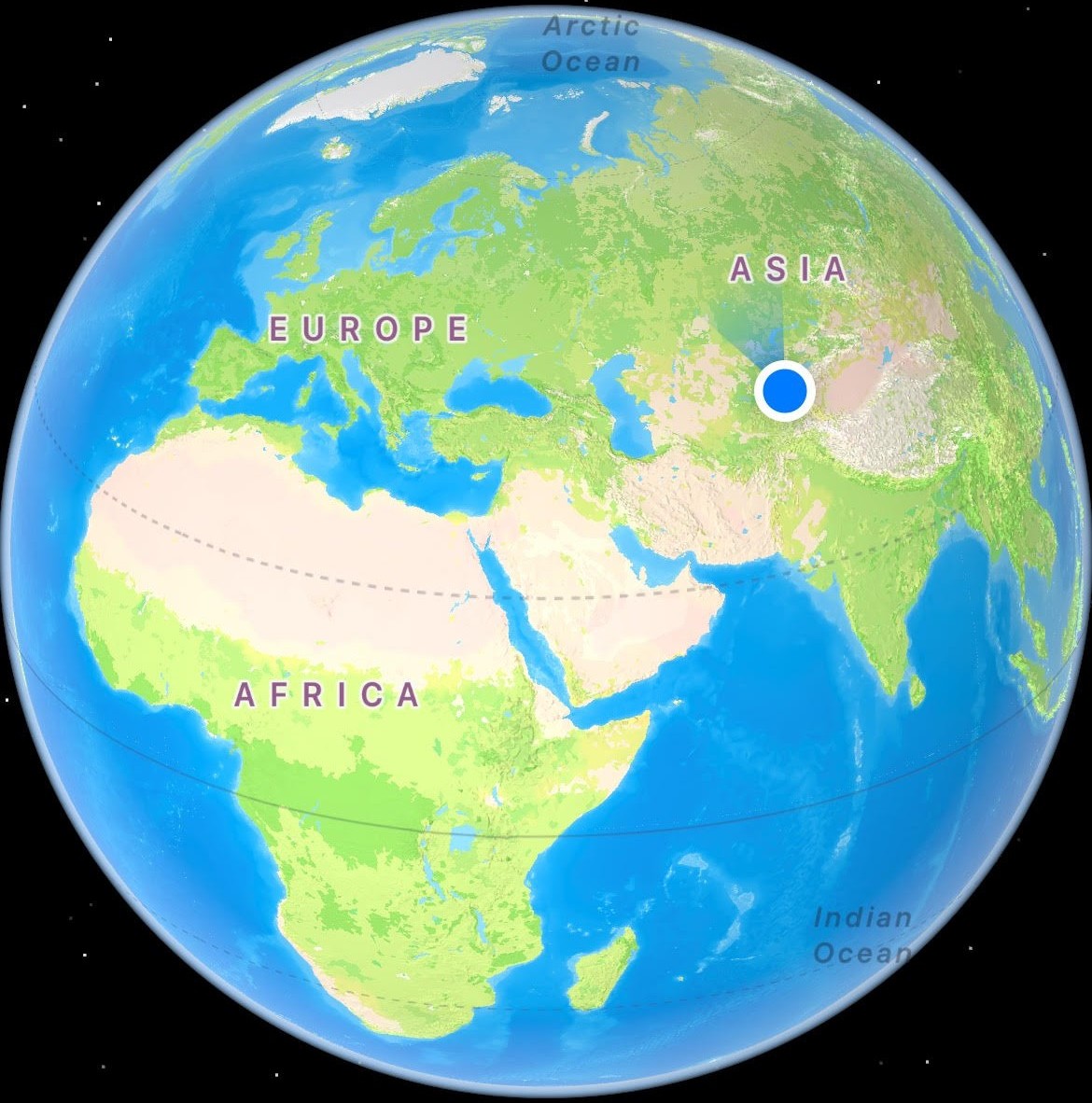
    My location in Osh, Kyrgyzstan

    Osh, the second biggest city in Kyrgyzstan and just an eight-kilometre ride from the Uzbekistan border, provided my finish line yesterday, and with a large dump of snow having fallen overnight at altitudes lower than those I’d have had to scale to ride much further, my decision to end this leg here has been vindicated.

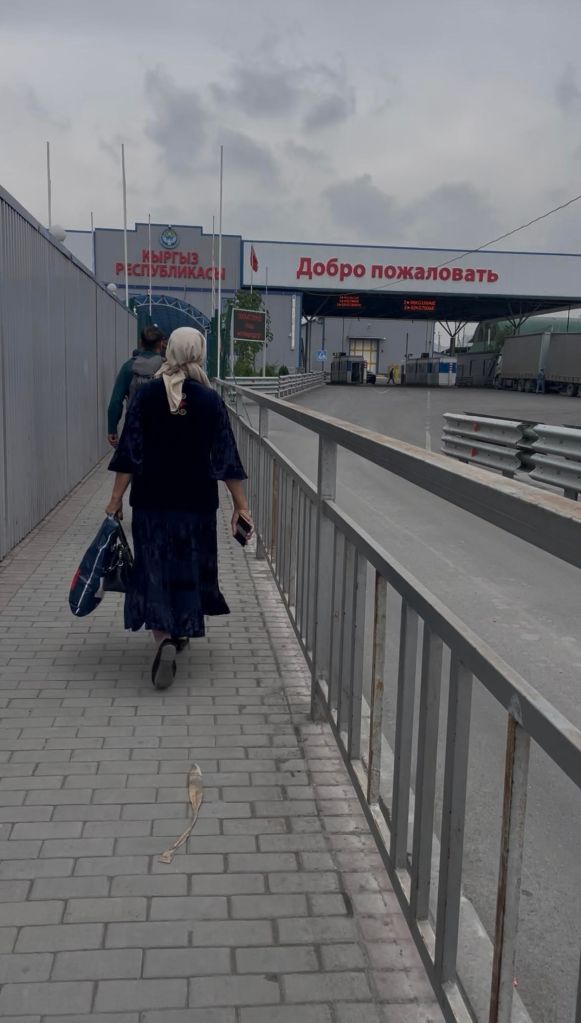
    Kyrgyzstan became the 14th country of my ride from home (including the UK), and it’s taken me a cumulative 75 days to get here. The thrill I feel in crossing a country border by road shows no sign of diminishing as I head east around the globe. I love the sense of anticipation that builds in the final kilometres before a border post as freight trucks queue to pass through customs and immigration, and I relish the crescendo of activity that accompanies the passage of humans and traffic from one country to another.

    This particular crossing, which I made with Bijou, the British cyclist I’ve overlapped with since arriving in Beyneu (Kazakhstan) and whom I’ve ridden with a bit over the last few days especially, was relatively smooth, with relief that the paperwork on the Uzbekistan side (which can apparently be a bit onerous) was painless, and some surprise that the Kyrgyzstan half of the process was so speedy.

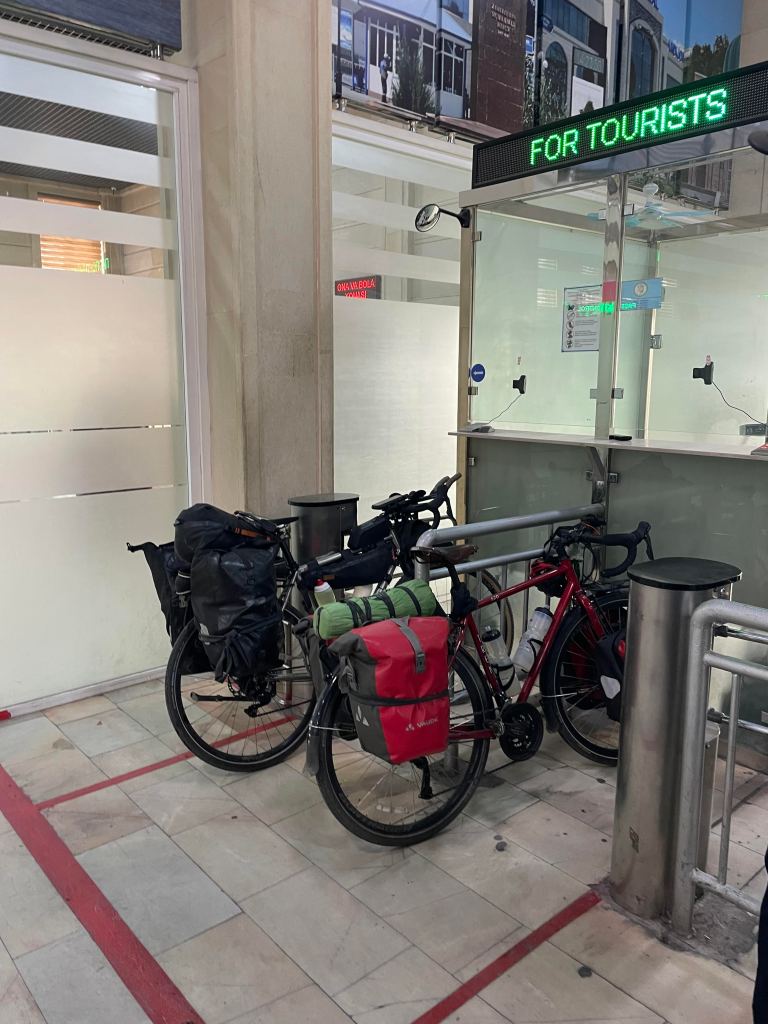
    Uzbekistan border control
    Entering Kyrgyzstan

    I know that it’ll take some time to digest everything I’ve experienced on this ride from Turkey to Kyrgyzstan, and there’s so much to reflect upon that I think rushing that process would do the adventure a disservice. But there is some immediate frame of reference from having reached the end of this ride.

    I spent 32 days on the bike, and another 19 days off it – mostly sorting the complex logistics that allowed the 32 days to happen!

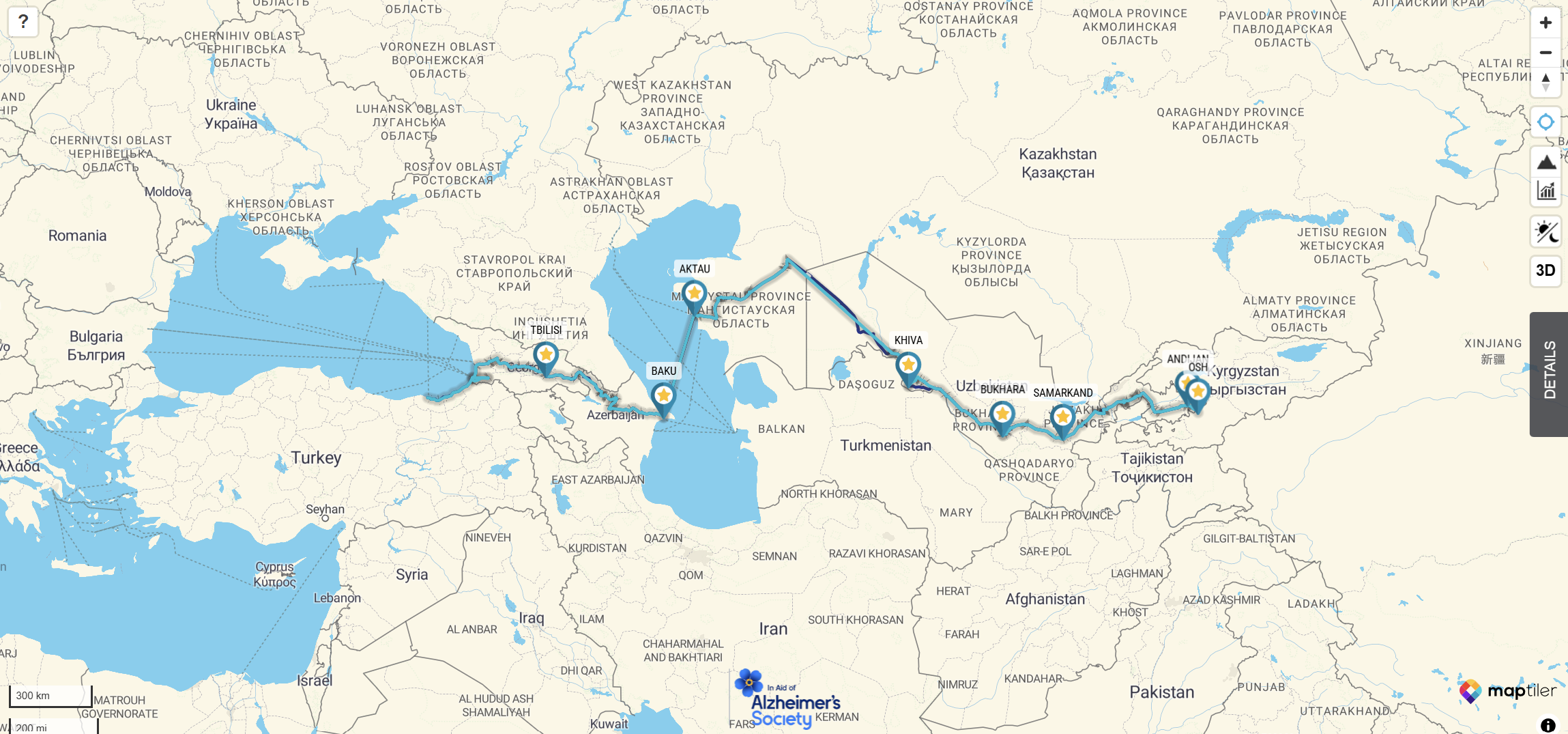
    My route from Turkey to Kyrgyzstan

    I crossed the eastern part of Turkey in bitterly cold and wet conditions, encountered an extreme blast of winter in western Georgia, and then enjoyed embracing spring as I rode from the Black Sea to the Caspian Sea across Georgia and Azerbaijan.

    On the east side of the Caspian, I stared out across the abyss of the desert from Aktau and felt intimidated by the journey that lay ahead; but I made it through the vast wilderness of that part of western Kazakhstan (wild camping in the remoteness of the desert as I went), and I headed on down to Uzbekistan, with the help of a train to cross the border, which was closed to road traffic when I reached the area (and will now, it’s just been announced, remain so until at least 1 September).

    Uzbekistan brought some incredibly challenging cycling, with enormous tracts of desert being baked in unseasonable 43-degree heat. As so often on a bike, however, I found great reward for the hardship – in the shape of the remarkable Silk Road cities of Khiva, Bukhara and Samarkand. And, later, the mountainous ride from Angren to Kokand was a hugely aesthetic antidote to the harsh industrial surroundings of the Almalyk and Angren areas.

    There have been plenty of challenges to face since I set off from Trabzon in Turkey. Thankfully, there was only one further puncture over 31 days and 3,260 kilometres after those that beset me on day one in Turkey after just 12 and 30 kilometres respectively! There were other consternations to cope with though: intense loneliness, stomach issues in Georgia, the closure of a key pass in the Georgian mountains that meant a three-day rerouting of my ride, having to haul my bike through 30 kilometres of wet clay where a road was being rebuilt in Georgia, being told I couldn’t board the sleeper train from Baku back up to the border town of Balakan in Azerbaijan, battling the howling headwind of the Mangystau region of Kazakhstan, developing an infection that required Kazakh antibiotics, a crash that wrecked the mountings on one of my panniers, and having to replace my rear tyre (yes tyre; not inner tube) three (yes, three) times owing to damage from troublesome road surfaces.

    But there are a plethora of things to feel grateful for too, and those things far outweigh the adversities. I had no major illnesses or injuries. And throughout the journey across six countries I often felt sucked along by the affections of people who wanted nothing in return for their kindness. I experienced acts of pure generosity (countless gifts of food, water, and help in many forms), but most of all the relentless positivity of people who provided encouragement along the way.

    There was an orchestra of friendly truck, van and car horns across the 32 days on the bike, with truck drivers far and away the most animated of road users. Perhaps there’s a natural affinity and respect between two species of long-distance traveller? And there was constant engagement along the road through interactions that usually began with a “where are you from?” and were almost always backed up with fist pumps, hands to the heart and other gestures of genuine warmth. So many times those gestures provided solace when the going got tough.

    We live in a world that’s increasingly fractured and vulnerable to political actors who seek to exploit people’s fears and aggravate their prejudices. My antipathy towards those actors was strong before I set off on this adventure, and it’s hardened during it. There is so much inherent goodness and shared humanity in people, and so much benefit to be had in celebrating and fostering those truths.

  • Samarkand to Kokand

    25 May 2025

    The narrowing of Uzbekistan as one heads east of Samarkand brings a very concentrated feel to the geography of this part of central Asia. After several days cycling across the vast expanse of the desert, during which huge distances separated pockets of civilisation, let alone countries, it’s been captivating to have wended a path that has now brought me so close to national boundaries. Uzbekistan occupies a strip of not much more than about 25 miles at its narrowest point, with Kazakhstan (to the north) and Tajikistan (to the south) providing the squeeze. At various points over my ride in recent days, I’ve been within touching distance of each of those countries.

    The funnelling of the country has had the psychological effect of drawing Kyrgyzstan (the last of the six countries I’m visiting on this ride – after Turkey, Georgia, Azerbaijan, Kazakhstan and Uzbekistan) into view – perhaps sooner than was warranted by the substantial kilometreage left on the road to reach it! I’ve had six days on the bike since leaving Samarkand, and I’ll only reach Kyrgyzstan the day after tomorrow.

    Those six days have been highly varied – in terms especially of topography. The rides to Jizzakh and Guliston were hot and largely flat, with the countryside changing only subtly, apart from the deviation I had to make off the main Tashkent (capital city) road to reach Jizzakh. There, rolling hills and rocky outcrops provided welcome definition to the closing stages of the day’s ride.

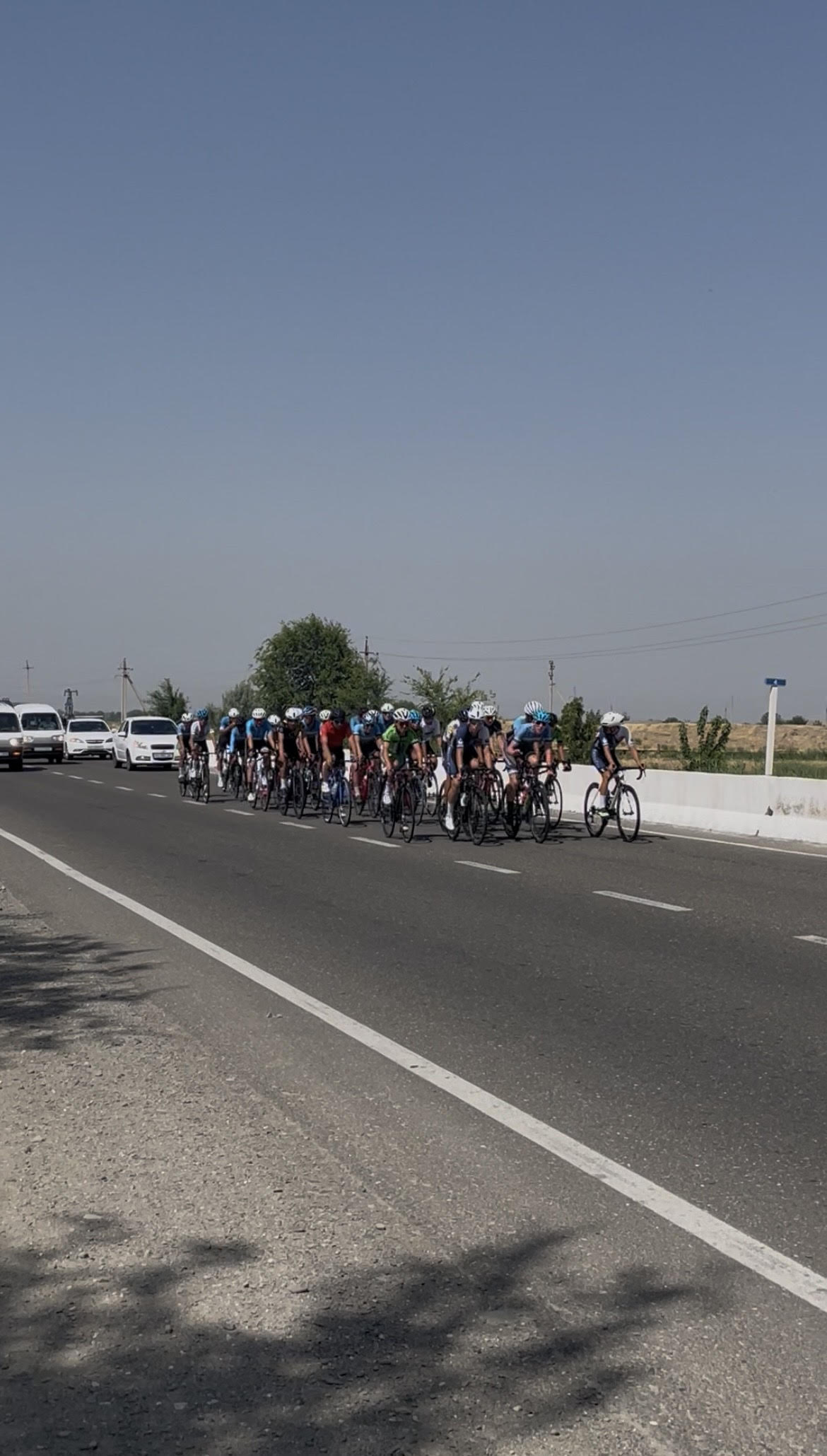
    The next morning, not far out of Jizzakh, I encountered a road closure, followed by the happy reason for it: a bike race being overseen – judging by the flotilla of mini vans following the riders – by the Uzbekistan national cycling team. I was grateful for the warmth of the reaction of the riders and their entourage to me and my fully laden touring bike.

    Actual cyclists on the road east of Jizzakh

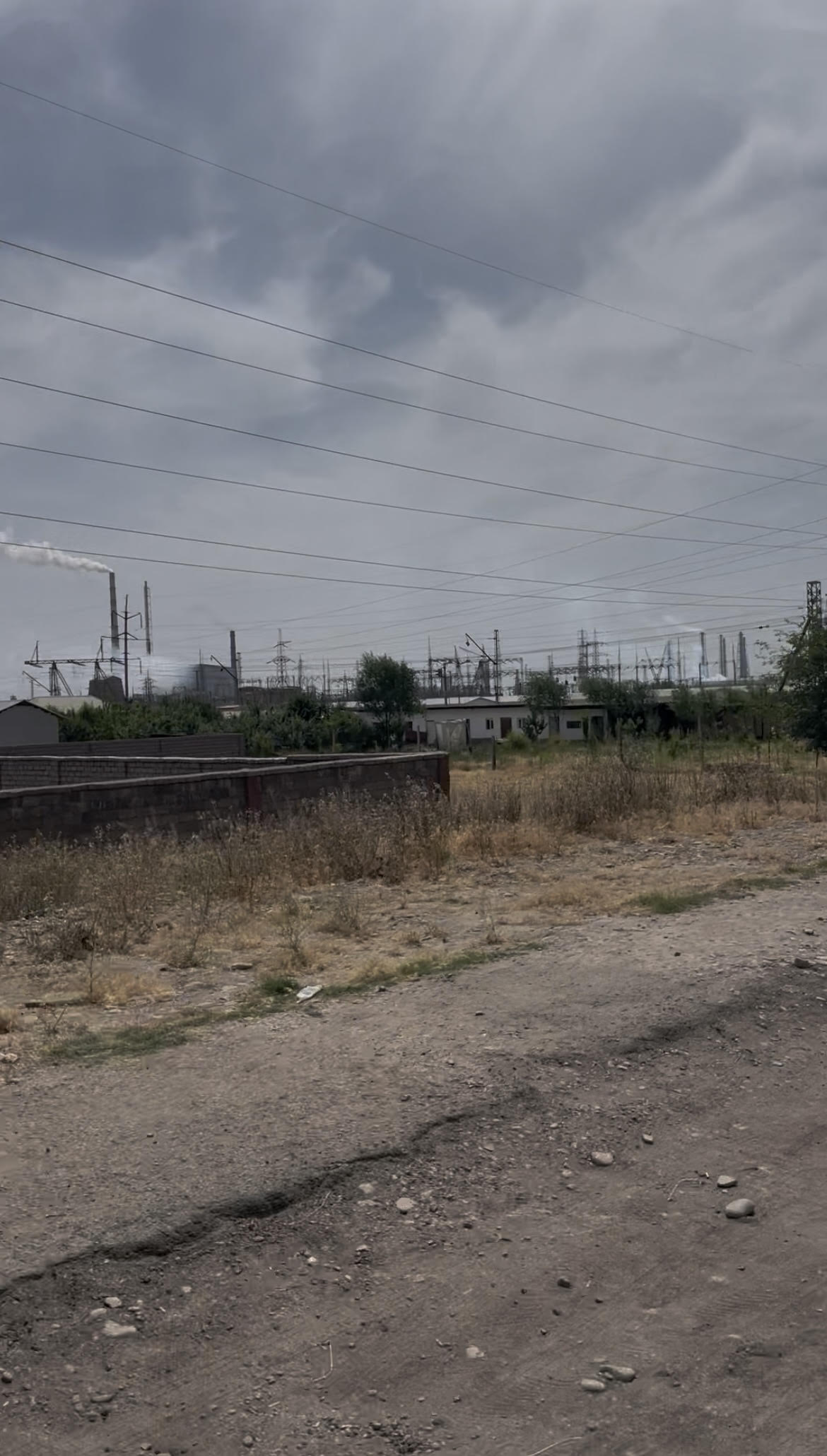
    From Guliston, I rode on to Almalyk, a 1930s Soviet ‘company city’ built to exploit the local reserves of copper, lead, zinc, gold, silver and barite. As I cycled into the heart of the smelting operations on the western side of the city, it wasn’t hard to understand why Almalyk is considered one of the most polluted places on Earth. The air was thick with the byproducts of smelting – visually, but also in terms of the smell and taste of the air. It looked and felt like a highly toxic environment, and I felt very sad to see children growing up in the midst of it. The combination of such corrosive industrial activity and the trappings of childhood in the shape of playgrounds and mini football pitches felt utterly incongruous, and my heart ached for the children who know no differently about the world around them.

    Smelting operations in Almalyk

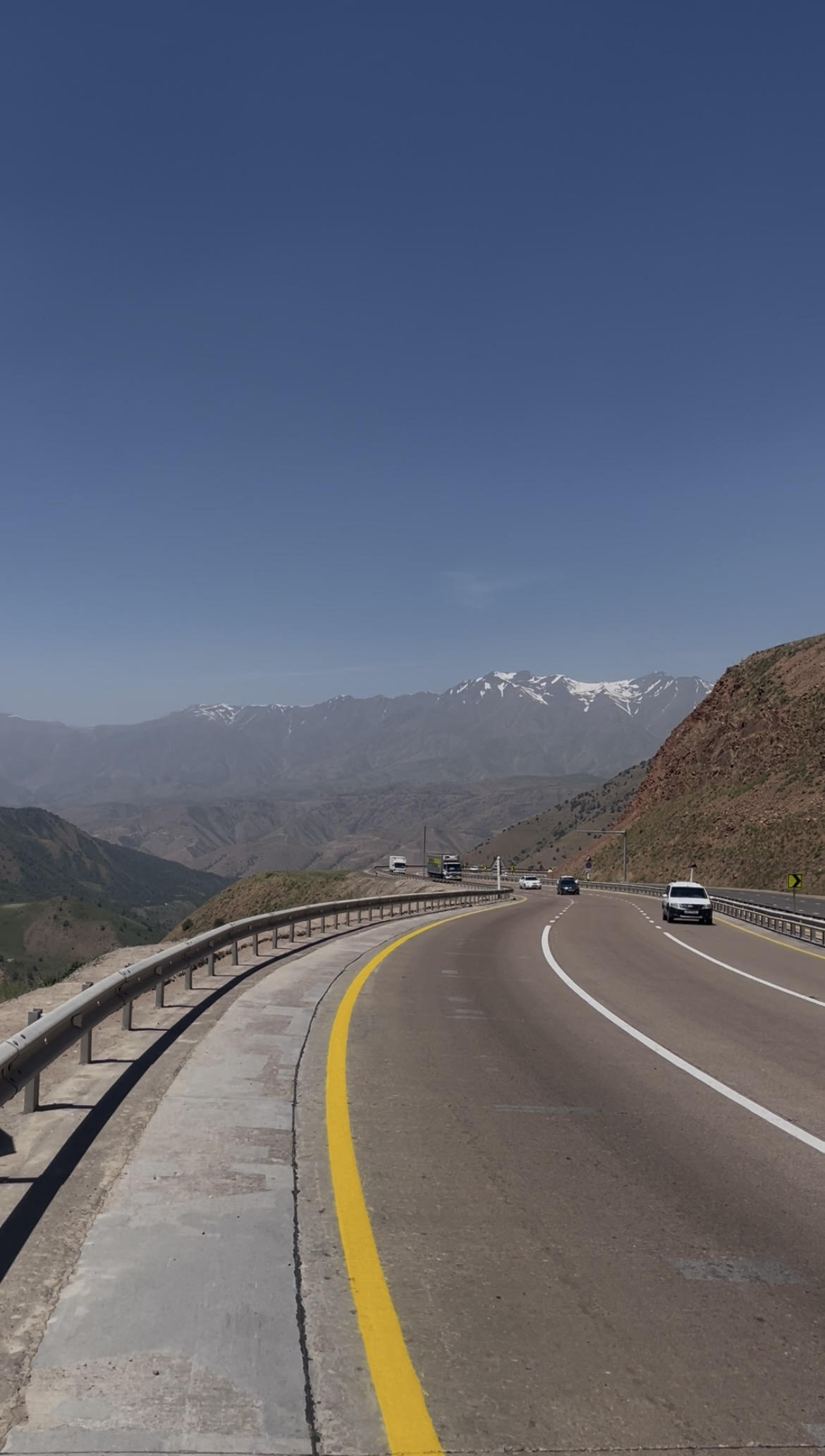
    Following a short hop across to Angren – a city that kept the industrial theme alive with its still flourishing coal industry – I began the two-day ride through the mountains to Kokand. Yesterday was spent hauling myself and my bike up a formidable climb to an elevation of 2,150 metres above sea level, and today reaped the benefits, with a steep descent most of the way south to Kokand. It’s been a great pleasure to ride some of this part of the journey with Bijou, the British cyclist who I first met in Beyneu (Kazakhstan). We’ve been overlapping a bit as we’ve crossed Uzbekistan, but have only latterly had the chance to ride together.

    Climbing to 2,150 metres above sea level

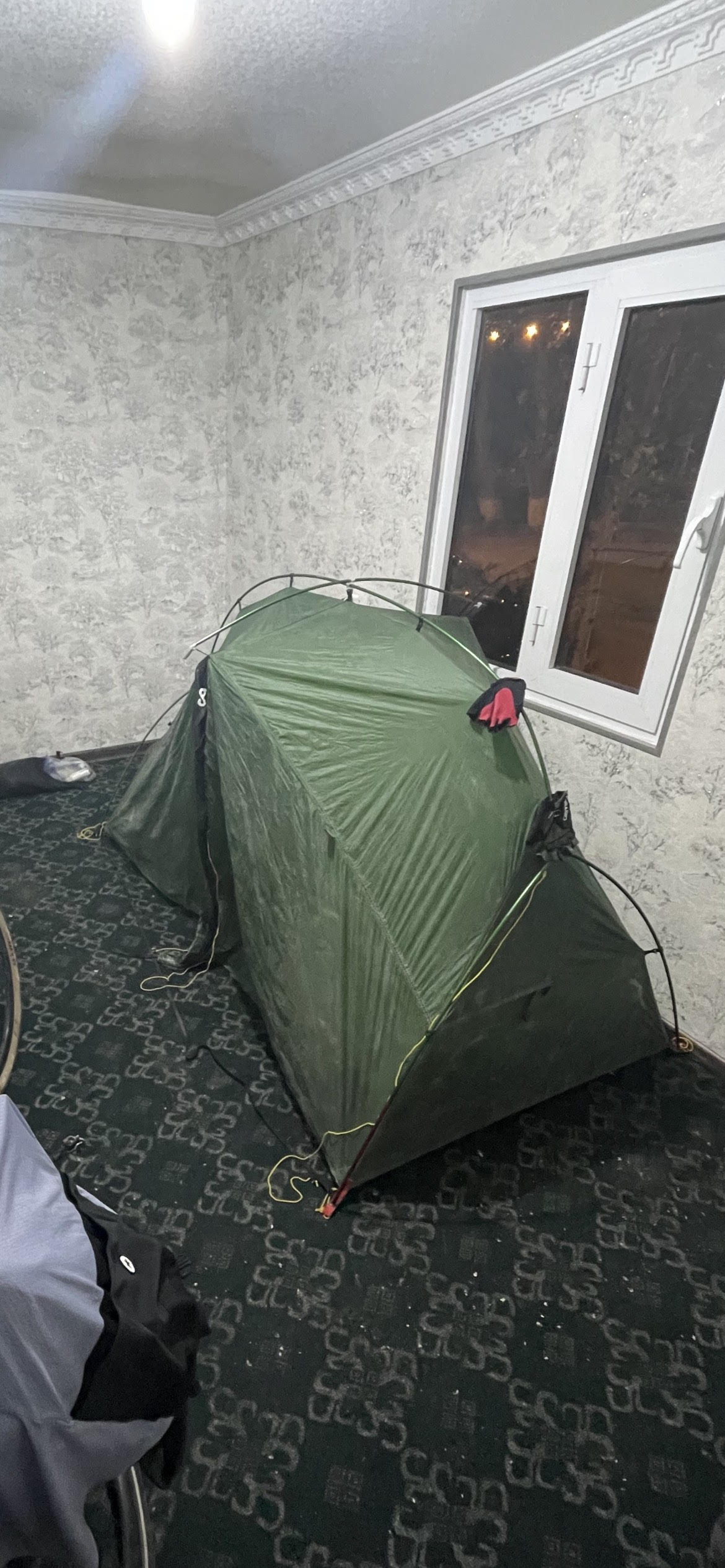
    Last night, thanks to Bijou’s valuable research, we were able to stay the night in a couple of rooms in a ‘choyxona’ (tea house). Their sole furnishing was a shabby carpet, but they gave us adequate space in which to put our tents and attempt to get some sleep! Unfortunately, the rooms sat next to the tea house’s car park, which became frustratingly noisy with loud chatter from about four o’clock this morning.

    Indoor camping!

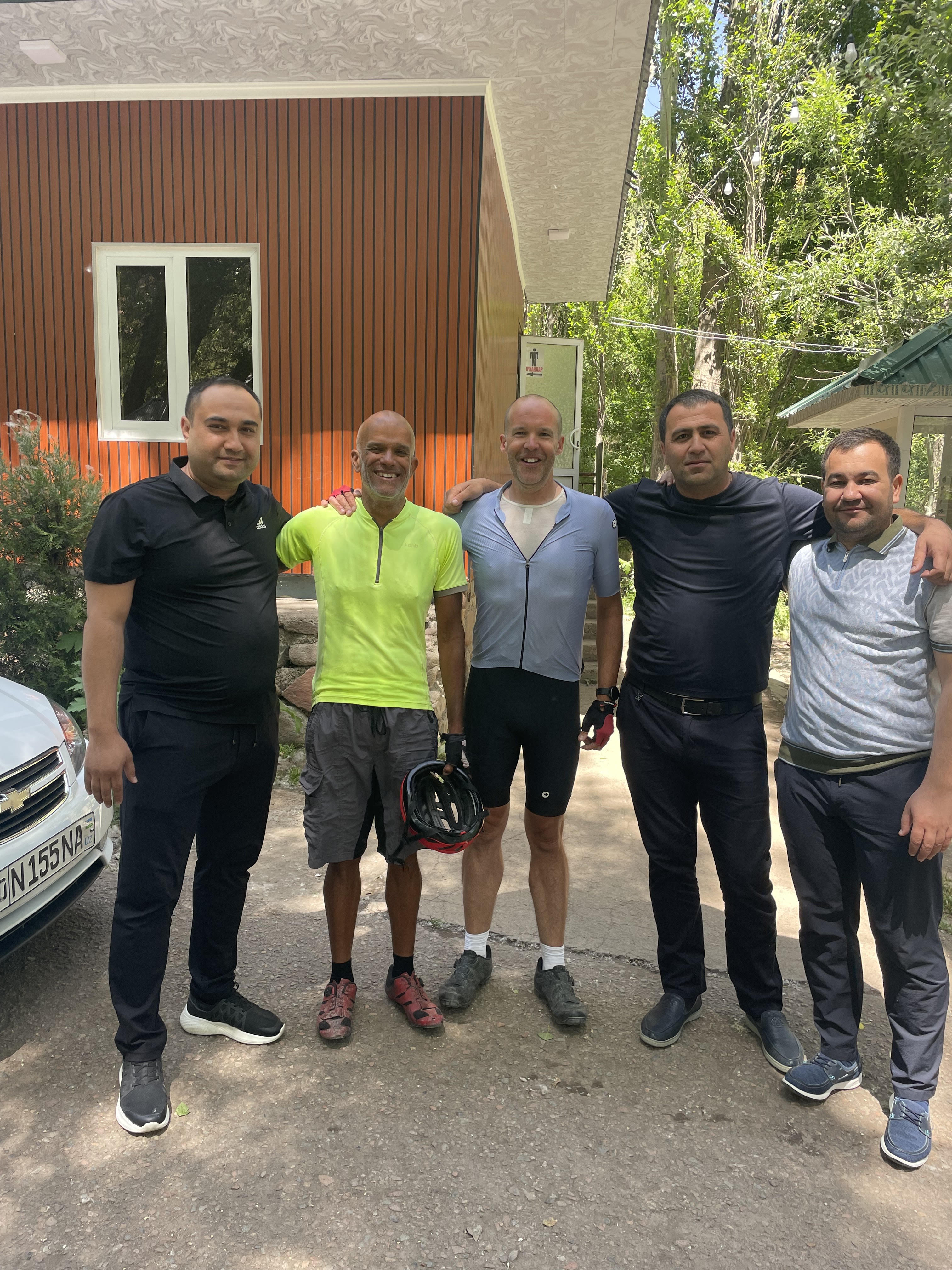
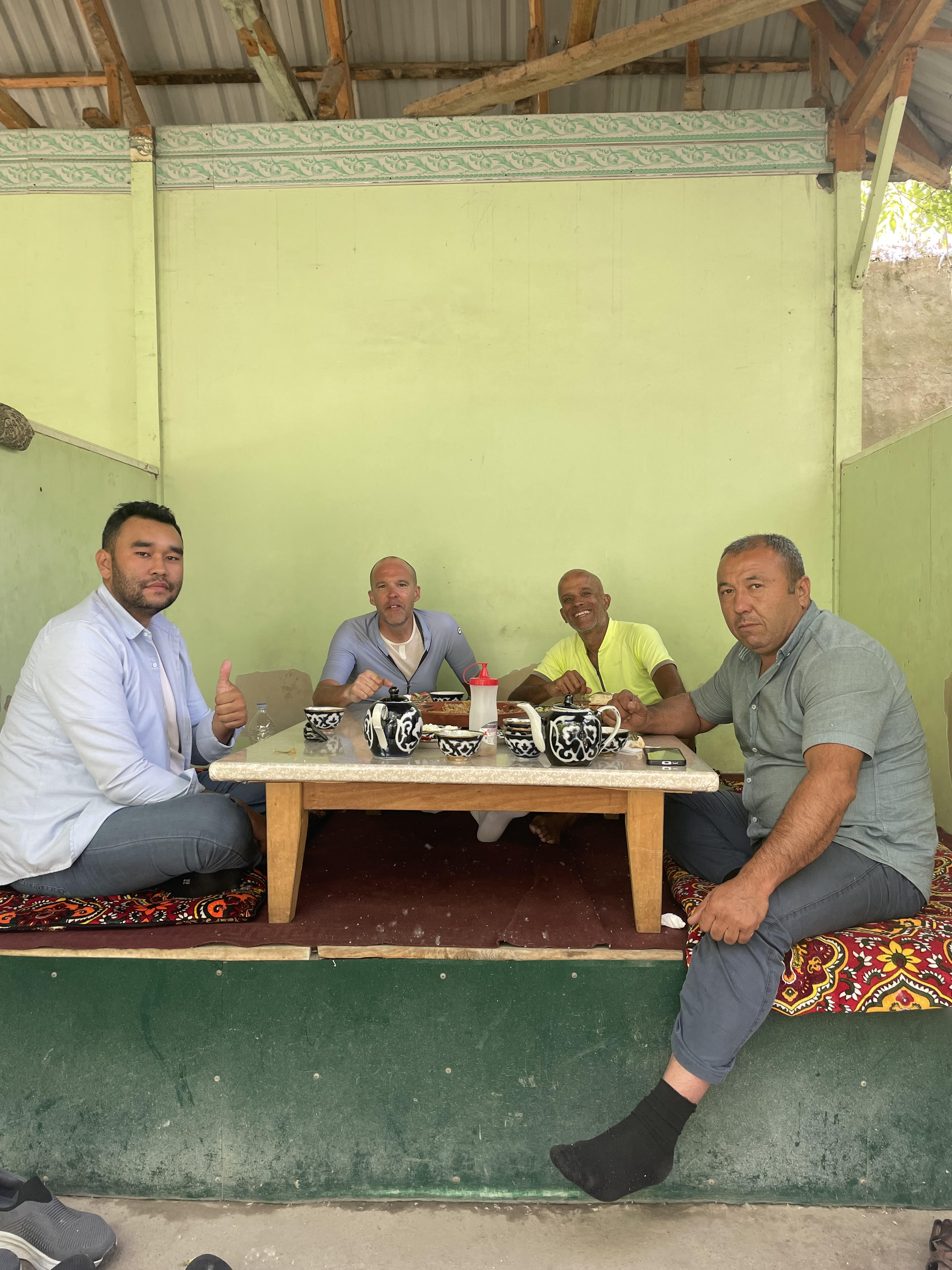
    On arriving at the tea house, we’d had a very warm welcome from some friendly Uzbek men who were keen to get a group photo with Bijou and me, but there was slightly less warmth from the tea house staff in terms of what it would be possible for us to eat for a late lunch. The business was stangely rigid in its commitment to provide only very large platters of food for groups of passing travellers, but not plates small enough to feed just two (albeit quite hungry!) cyclists.

    A warm Uzbek welcome at the Xasan samovar choyxona (tea house)

    With frustration growing, a kind man (who later explained that he was a doctor in Tashkent) and his friend invited us to join them for a large plate of plov (rice and mutton), tomato salad and Uzbek non (bread) at a ‘tapchan’ in the garden of the tea house – a raised, wooden platform that combines a large bed-like area with a table at which everyone eats. They wouldn’t accept any contribution from us for the meal – yet another example of the ceaseless kindness of strangers that so typifies these cycling adventures.

    A traditional Uzbek lunch of plov – the touching kindness of strangers

    From here in Kokand, it’s a two-day bike ride to Osh (the second largest city in Kyrgyzstan), and I’ve decided to end this adventure there. Obtaining reliable information about the feasibility of cycling into the Kyrgyz mountains, and in particular as to whether a key pass – at an altitude of 3,100 metres – will have reopened by then (it does so for only three months of the year) has proved very difficult. Such is Kyrgyzstan’s geography that my only alternatives to crossing the country actually involve passes at even higher altitudes!

    Dealing with uncertainty is part and parcel of long-distance cycling ventures, but that uncertainty usually occupies a spectrum with plenty of nuance and scope to problem-solve. The uncertainty in seeking to navigate the heart of Kyrgyzstan is different, with no back-up plan available should I get stuck. It was no doubt optimistic to believe that my route would have opened up unambiguously by now (typically it does so by the beginning of June, but sometimes at that stage only to 4×4 vehicles). Faced with the ambiguity of the situation on the ground, making Osh my destination for this ride is the right decision. The corollary of that decision – that I can now be home in time for our youngest’s 13th birthday – brings me more joy than I could ever need to offset any disappointment on my bike.

  • Samarkand

    19 May 2025

    Samarkand is the third of the three major Uzbek Silk Road cities I’ve now visited, following my stays in Khiva and Bukhara last week. It has an aura and a serenity to it, and it’s not been a difficult place in which to spend a rest day and absorb some remarkable history.

    It helps that the weather has become more merciful. 29c is conducive to taking in a city’s history and elegance in a way that the much hotter temperatures I encountered last week really weren’t! Walking around Samarkand today, I’ve been accompanied by a soft breeze, and I felt relaxed under the brim of the hat I’d bought in Aktau to manage the effects of central Asia’s beating sun.

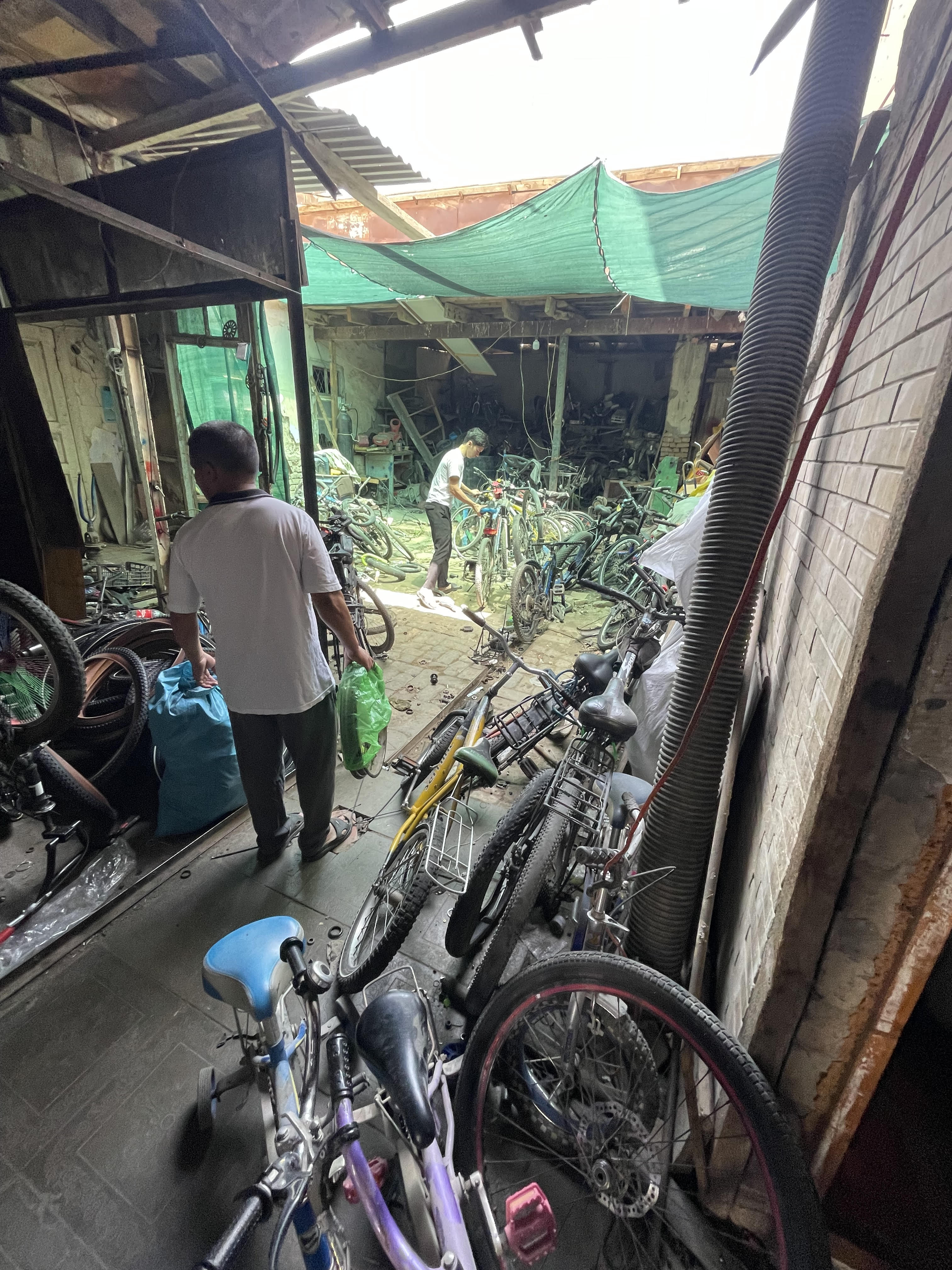
    Before adopting my full tourist persona today, I went on a bike-focused mission part of the way across the city this morning. I’ve had an issue with my gearing since reassembling my bicycle on the east side of the Caspian, and I haven’t trusted myself to tighten the cabling effectively with the limited array of tools I’m able to carry on the bike. Ahead of the more hilly and mountainous days that lie ahead, I’d eyed Samarkand as a location for seeking some help from a bike shop. I’ll be adding a more robust pair of pliers to the kit list on my next adventure!

    Some useful reviews had earmarked one particular shop, but the owner seemed not to have any kind of workshop from which to offer help. He directed me to another place further up the road, with a workshop, but one whose owner was steadfast in his declaration that he dealt with “only Chinese bikes”. A kind lady, seeing my predicament, gestured further still up the road to a young man who could apparently help.

    In Russian (everyone in this part of the city spoke Russian rather than Uzbek as their first language), and with the indispensable help of Google Translate, I explained the problem with the bike, which elicited the response, in English – “I understand” – and a beckoning into the workshop through an inauspicious metal gate.

    I felt immediately reassured, but a moment later somewhat less so. To put it mildly, the workshop lacked the sense of order that typifies the places where my bike has previously been given plenty of TLC. But needs must, and my worries quickly evaporated. Just as my contrition towards the bike manufacturer and those who’ve serviced the bike before was brewing, the voice from the workshop proclaimed “ok, it’s good”. I tried very hard to pay, but the young man’s protestations were clear. “Small problem”, he kept emphasising, and I left him feeling huge gratitude for his help and kindness.

    Bicycle workshop, Samarkand

    I’ve spent the afternoon wandering around Samarkand – one of the oldest cities in central Asia. It’s believed to have been founded between the 8th and 7th centuries BC, was conquered by Alexander the Great in 329BC, and then ruled by a succession of Iranian and Turkic rulers until it was taken by the Mongols under Gengis Khan in 1220.

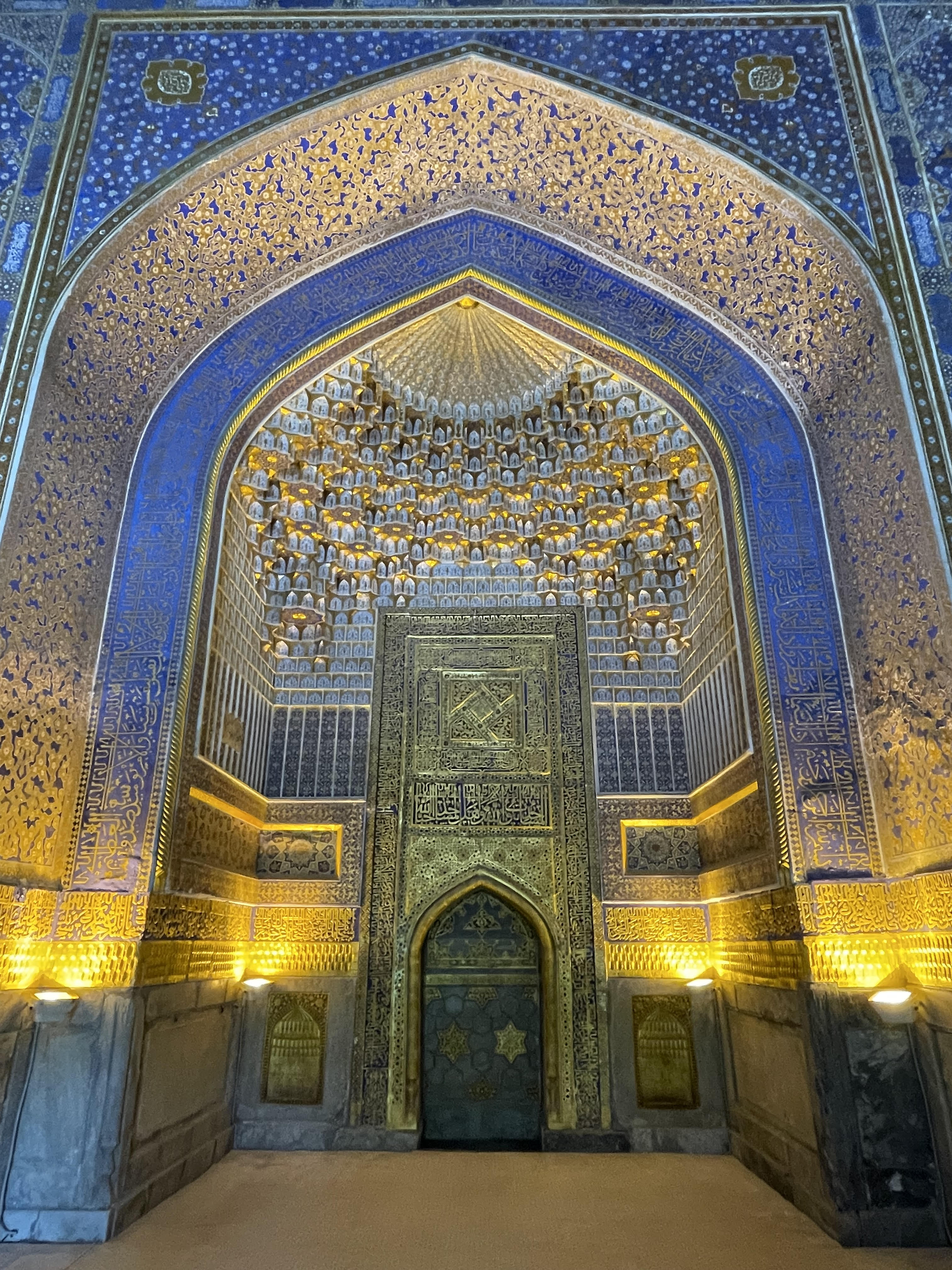
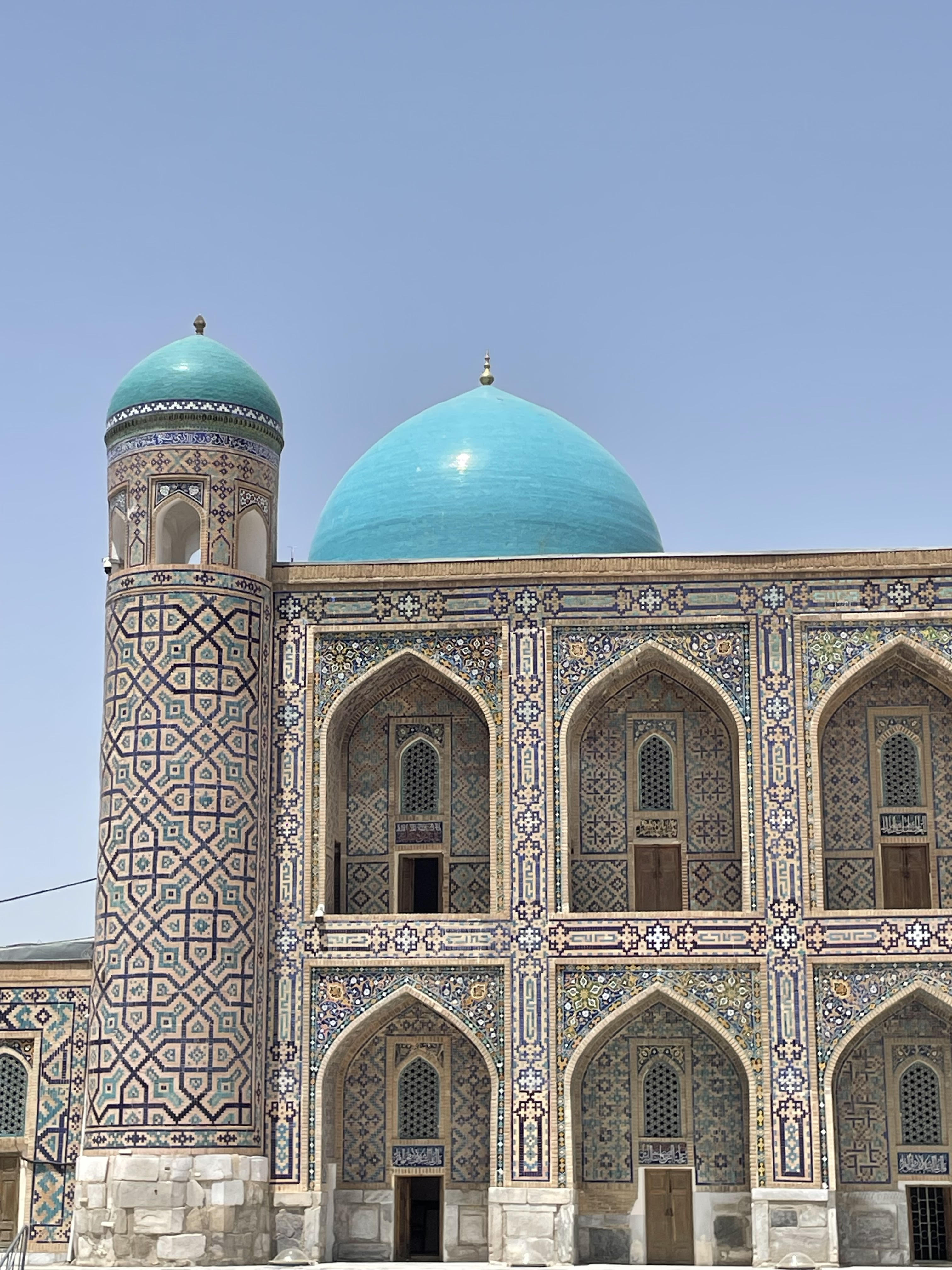
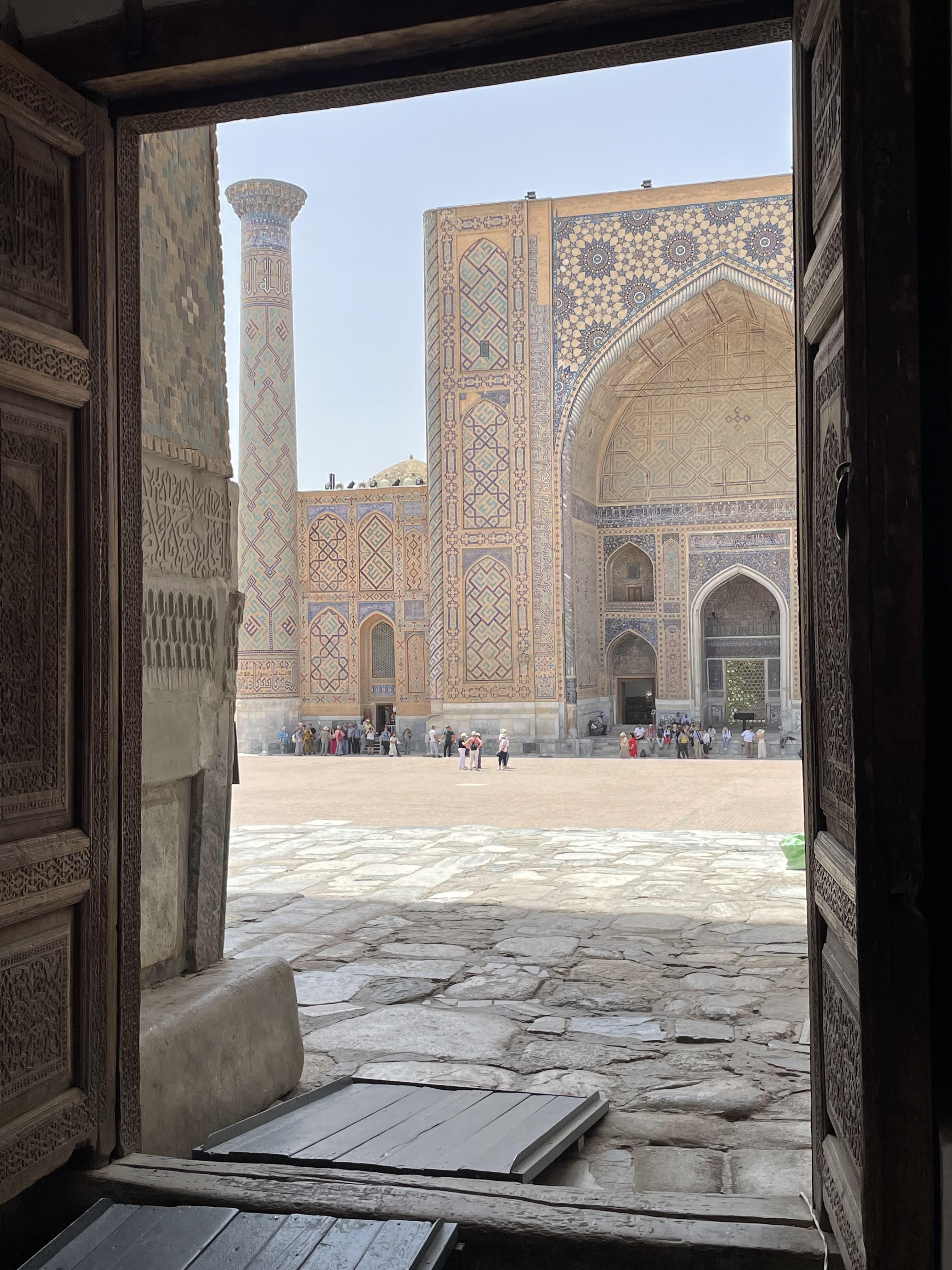
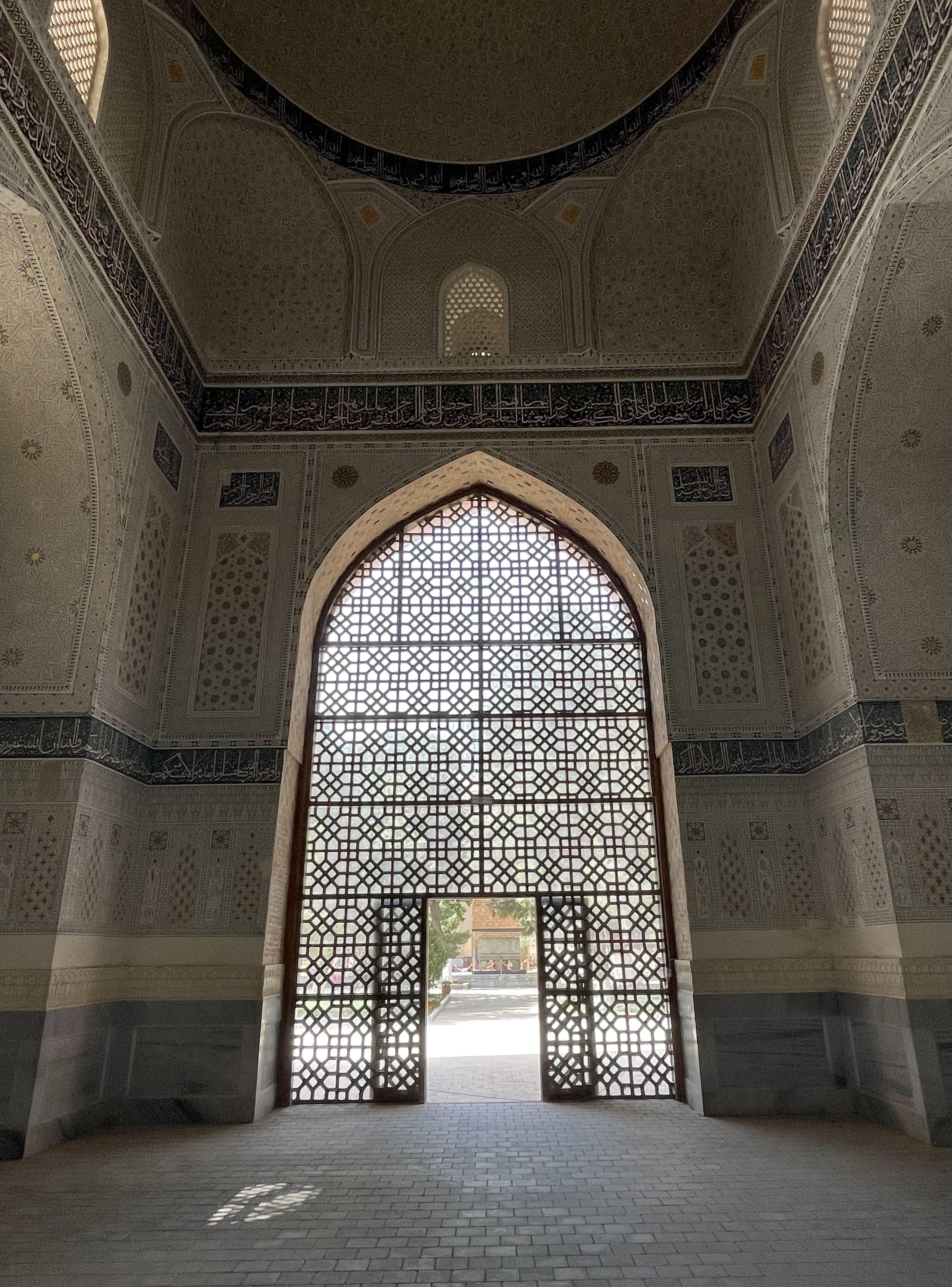
    I began at the iconic Registan Square, flanked with its three madrashas (schools), the earliest of which was built in the early 1400s, and I later visited the Bibi-Khanym mosque and mausoleum. The city is photogenic in the extreme, and I’ve had to remind myself to take in the beauty around me as well as try to capture it in pictures!

    Tomorrow, I’ll continue my ride east to Jizzakh. I’ll be sad to leave these magnificent Silk Road cities, and Samarkand in particular, behind.

    Registan Square, Samarkand
    Inside the Tilla-Kori madrasah, Samarkand (1646-1660)
    The Tilla-Kori madrasah
    Looking across to the Ulugh Beg madrasah (1417-1420) – the oldest of the three madrasahs in Registan Square
    The Bibi-Khanym Mosque

  • Khiva to Bukhara: Five days in a scorching desert

    15 May 2025

    One of the great attractions to me of riding my bike big distances far from home is the excitement of the unknown. Around every corner is a new vista, and the constantly renewing element of surprise that comes with that is hugely motivational.

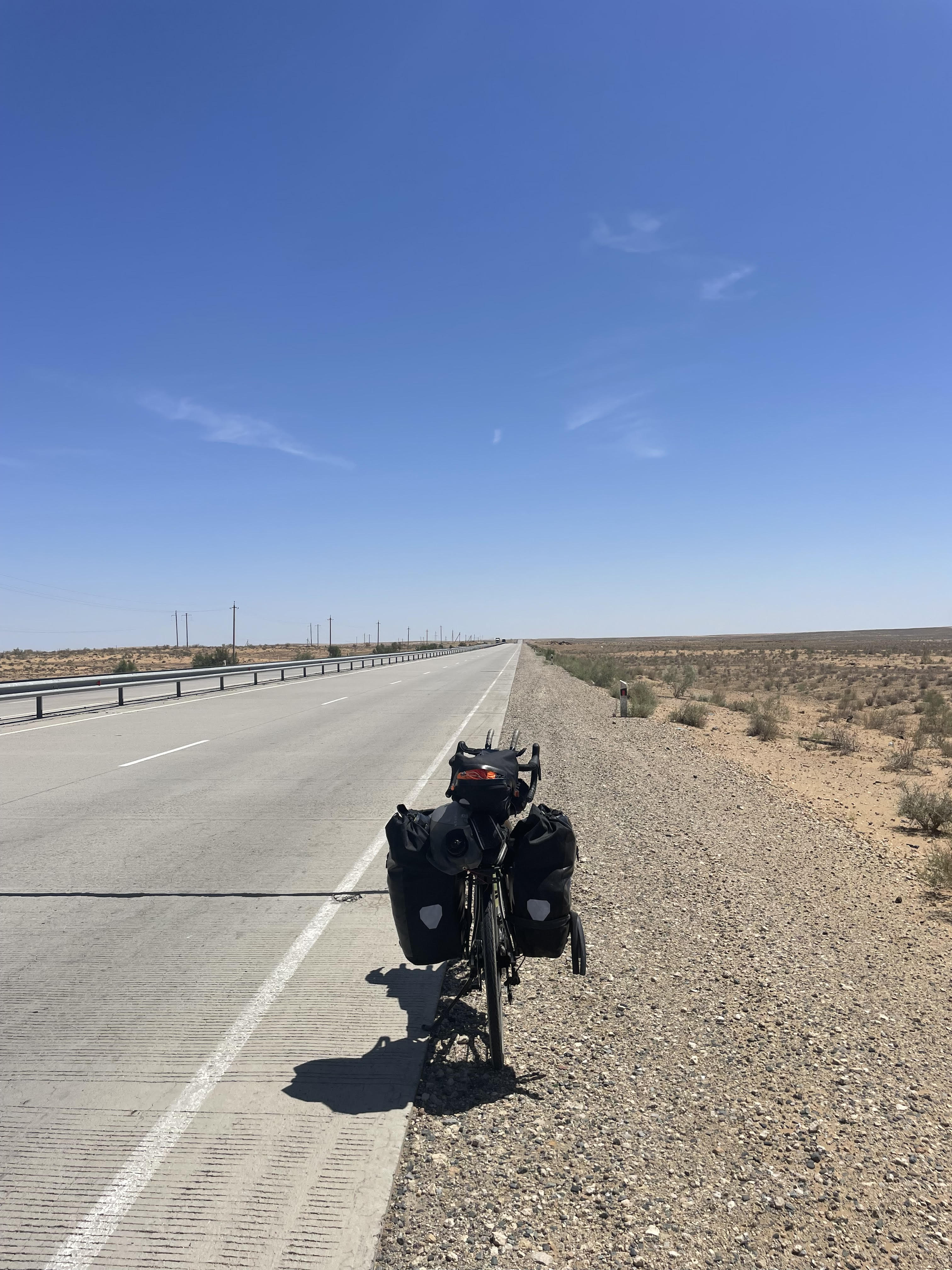
    But in the desert, things can be very different! For the last five days, I’ve known pretty well what lies ahead. There have been very few corners to turn, and just as few ‘big reveals’. For the most part, the road has been very long and very straight, and that has been a test of mental fortitude as well as physical resolve. Sometimes, certainty can be a much more difficult foe than uncertainty!

    The challenge has been compounded by the weather, with a heatwave having exerted its considerable influence over all of the last five days. The saving grace in such an arid place is that accompanying humidity levels are low; the last thing I’d have needed was any inhibition of the sweating process that allows the body to cool down. But highs of 43c – even if ‘dry’ – are not to be taken lightly as a cyclist riding across a shadeless desert.

    Remarkably, given that the temperature when I left Khulo in the Georgian mountains just over a month ago was -7c, I’ve now experienced a Celsius temperature range of 50 degrees so far on this journey from Turkey!

    The road beyond Akkamysh

    For all of the superficial monotony, the last five days have nonetheless been punctuated with adventures and moments of great kindness. On my first day riding eastwards from Khiva, a bone-shaker of a road for about 20 miles had left me feeling fairly bruised and battered (if only metaphorically), but as a smooth dual carriageway abruptly replaced the decaying surface of the previous couple of hours, a family of ten pulled up in their mini van to say hello. It was the son (aged about 14) who made the conversation while his family proudly looked on, and it was a joyful moment that left me smiling and the travails of the rough road forgiven. 

    On day two, there were multiple instances of kindness on the road, with one particularly touching one coming when a truck driver slowed alongside me to allow his passenger to hand me a large bottle of cold water! It came at a good time given that by that point every drop of fluid I had on the bike had heated up to the (very high) ambient air temperature! I also had some good chats whenever there were opportunities to stop for further water top-ups. I came across a group from Moscow, and chatted to one of them about the Trans-Siberian Railway and the renowned natural wonder of Lake Baikal in particular; and later I met a couple from Edmonton, Canada who were doing a road trip across the Silk Road cities.

    For the second night running, I stayed in a roadside motel. At this one, the owner, a lovely man called Davron, was keen to share his love of Adele with me by pumping out some of her songs on a (very) loud speaker – enabled by a combination of Bluetooth and one of his tech-savvy daughters who ably assisted in setting up the connection. I’m not suggesting Davron overdid it with the volume, but his playing of ‘Set Fire to the Rain’ was the prelude to a five-hour power cut at the motel! As I sat and ate some delicious dumplings and a tomato salad with him, Davron resorted to playing me music by the ‘Uzbek Adele’ on his phone, while also trying to sell me the virtues of buying a bottle of his Uzbek whisky.

    On day three, I set off early from the motel to try to get ahead of the building heat in the desert. With the prospect of sleeping on the floor of one chaikhana (tea room) later that night apparently now ruled out, I’d heard from Bijou (the British cyclist riding a couple of days ahead of me and providing very helpful intelligence about sleeping options across the desert) that a guy called Aziz, who is building his own chaikhana, was happy to let passing cyclists pitch a tent in his construction site.

    Meeting Aziz was a relief, and he was evidently keen to provide help in a situation where options were definitely limited. After parking my bike and belongings with him, I had lunch at the nearby Kizilqum tea house (which no longer extends its hospitality to the overnight use of its floor, but does serve good food).

    Aziz – a guardian angel in the desert

    Kizilqum was inundated with tour parties doing the Silk Road expedition. As jarring as I can find organised tourism like that, it was a pleasure to get chatting to friendly people from all corners of the world – including Namibia, Poland, and California. Many of them asked for photos of me with my bike. “You’re a celebrity”, one of them proclaimed, which was very flattering, but of course ludicrously inaccurate!

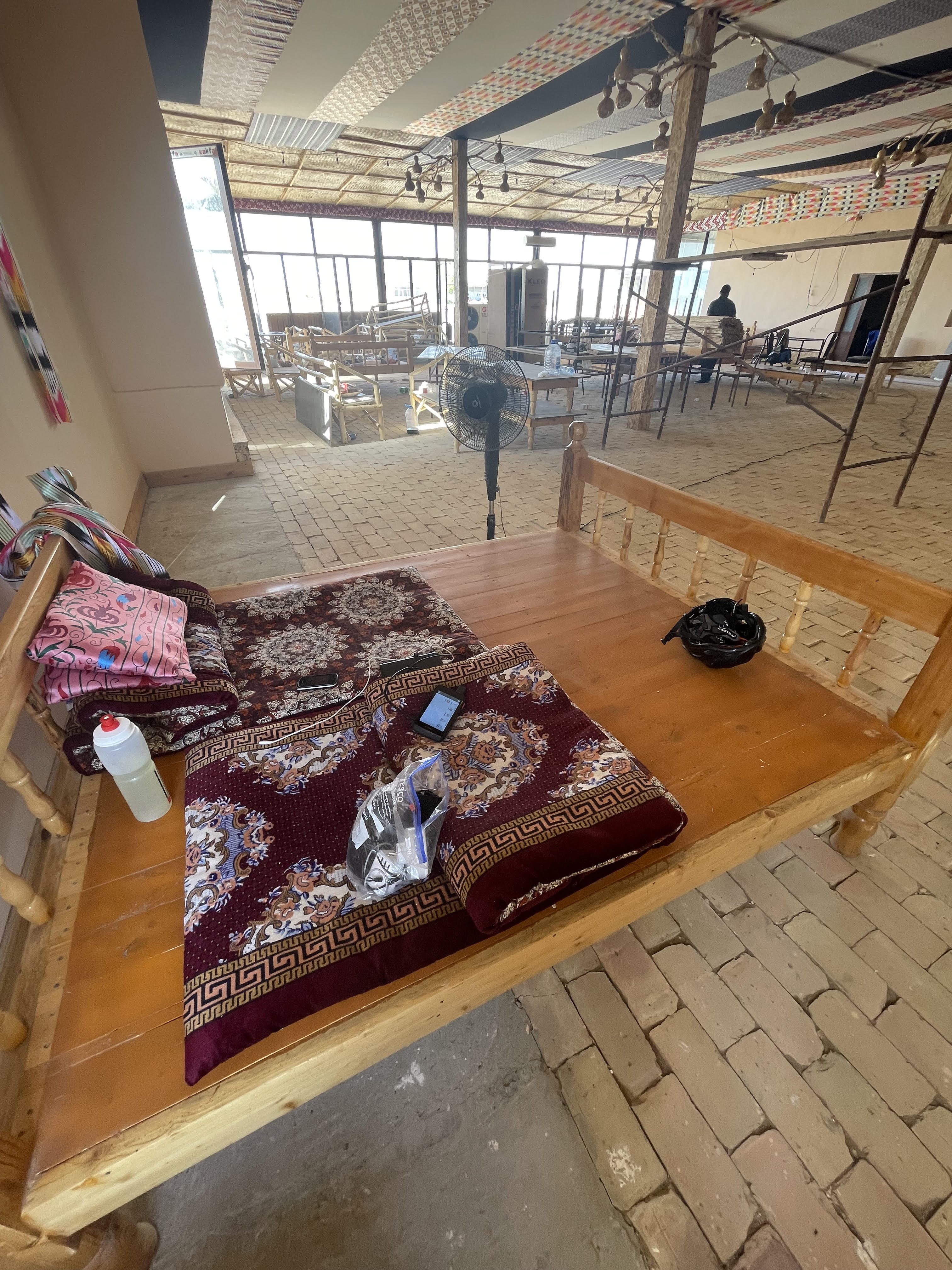
    While I was hugely grateful for Aziz’s welcome, as well as the nourishing chicken, chips and tomato salad he cooked up for me in the evening of my stay, my night in the construction site wasn’t optimal in terms of recovery ahead of the following day’s ride. Despite having a fan, which Aziz kindly set up for me, the heat was pretty stifling and the steady succession of stopping truck drivers actually became more frequent as it got late, with Aziz still cooking for them after midnight. The noise and distraction of that weren’t conducive to being able to sleep. 

    My bed for the night

    After a shortish night, I woke up at 5.30am and was on the road by 6.30am to get ahead of the heat again. Aziz kindly got up to see me off, and it was good to be able to thank him and wish him all the best for the chaikhana when it opens (in August by the sounds of it).

    On the ride down to Gazli, I encountered a huge number of desert locusts over a distance of about 50 kilometres – all of them travelling from north to south across the main A380 highway. They weren’t swarming – more limping their way across the road surface, motivated to break into a hop only by the drafts of passing vehicles. Their migration seemed on the face of it to be pretty futile given the lack of obvious vegetation for them to feast on in the desert (and most appeared to be hugely weakened by the process, with large numbers of their dead piling up against manmade obstacles – particularly at a petrol station where I stopped for water). I’ve read, however, that swarms can travel up to 130km in a day, so no doubt I underestimated their ambitions!

    I reached Gazli by about noon and checked in at a gas workers’ hostel that’s happy to open its doors to adventurous travellers. It provided a hugely valuable stop-off point for me that allowed me to split my journey to Bukhara and gave me respite from the relentless heat of the desert. At £3.50 for the night, it was unquestionably good value, although the latrine and showering facilities are probably best glossed over!

    Night falls on Gazli

    I set off on the ride down from Gazli to Bukhara at 6.15am this morning, which again allowed me to get ahead of the most intense heat of the day. The locust activity escalated during the middle part of today’s ride, and any attempt to slalom between the little creatures became impossible as they began to blanket the road. A number of them confused my legs for vegetation, which gave me a close-up view of their vivid green and yellow colouring!

    Bukhara, like Khiva before it, provided a real sense of a destination to head to, and arriving here has given me a sense of contentment. I’ll be exploring the city tonight and spending the day here tomorrow too. After the exertions involved in crossing the desert from Khiva, it’ll be good to have some respite from turning those pedals!

  • Khiva – one of those big arrivals

    10 May 2025

    Sometimes the arrival at a destination is so joyous, perhaps even overwhelming, that the grit of the journey to achieve it is quickly forgiven. Reaching the Silk Road city of Khiva at a quarter to seven yesterday evening fell readily into a bracket of atonement that most memorably for me also included the Blue Mosque in Istanbul, which had been awe-inspiring on a balmy evening last June when our son Thomas and I arrived there (and thus completed my ride from home to the edge of Europe).

    Yesterday’s 107-mile ride from Nukus to here was, yes, gritty. Under a beating sun and on road surfaces that frequently broke up into rubble, it was already destined to be a gruelling day. A crash – my first of the trip – roughly one third of the way into my ride made it more so. I’d seen the danger – a tram/railway track on a bridge over the Amu Darya river that I needed to traverse at right angles to avoid getting stuck in the track. But I got my trajectory wrong, my back wheel duly lodged in the track, and I was sent sprawling across the road.

    My instinct whenever I crash on a bike is to worry about the bike rather than myself. Barring serious injury, my ailments can be fixed. Far from home and in a remote location, the same cannot always be said of the bike. I got back on my feet readily enough – aware of some pain in my right shoulder, right knee and chest. More concerningly, it became clear a little further down the road that the impact of the crash had caused the fixings on one of my panniers that ensures it stays mounted to its rack to shear clean off. Another challenge to solve, but there will be a solution!

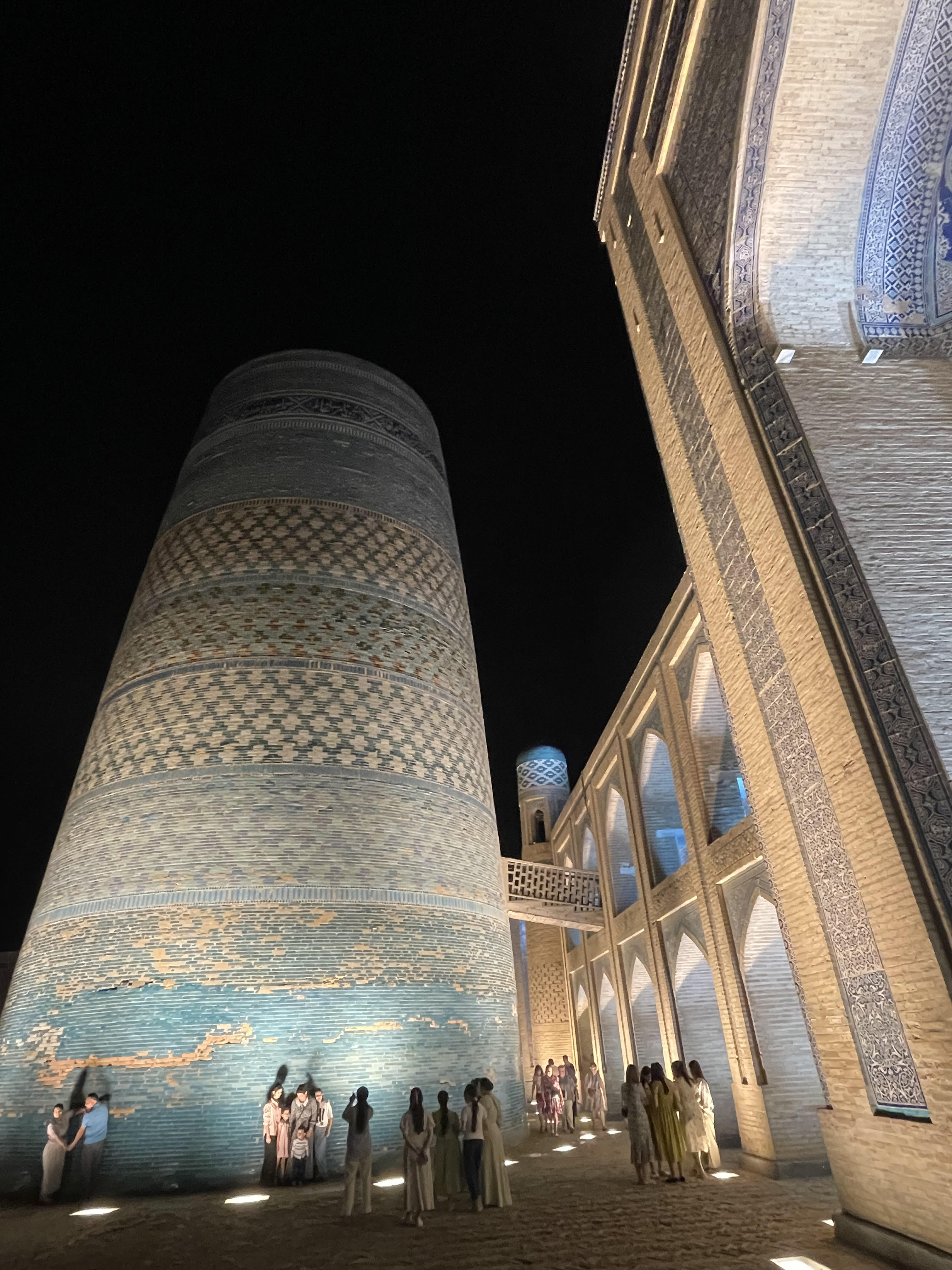
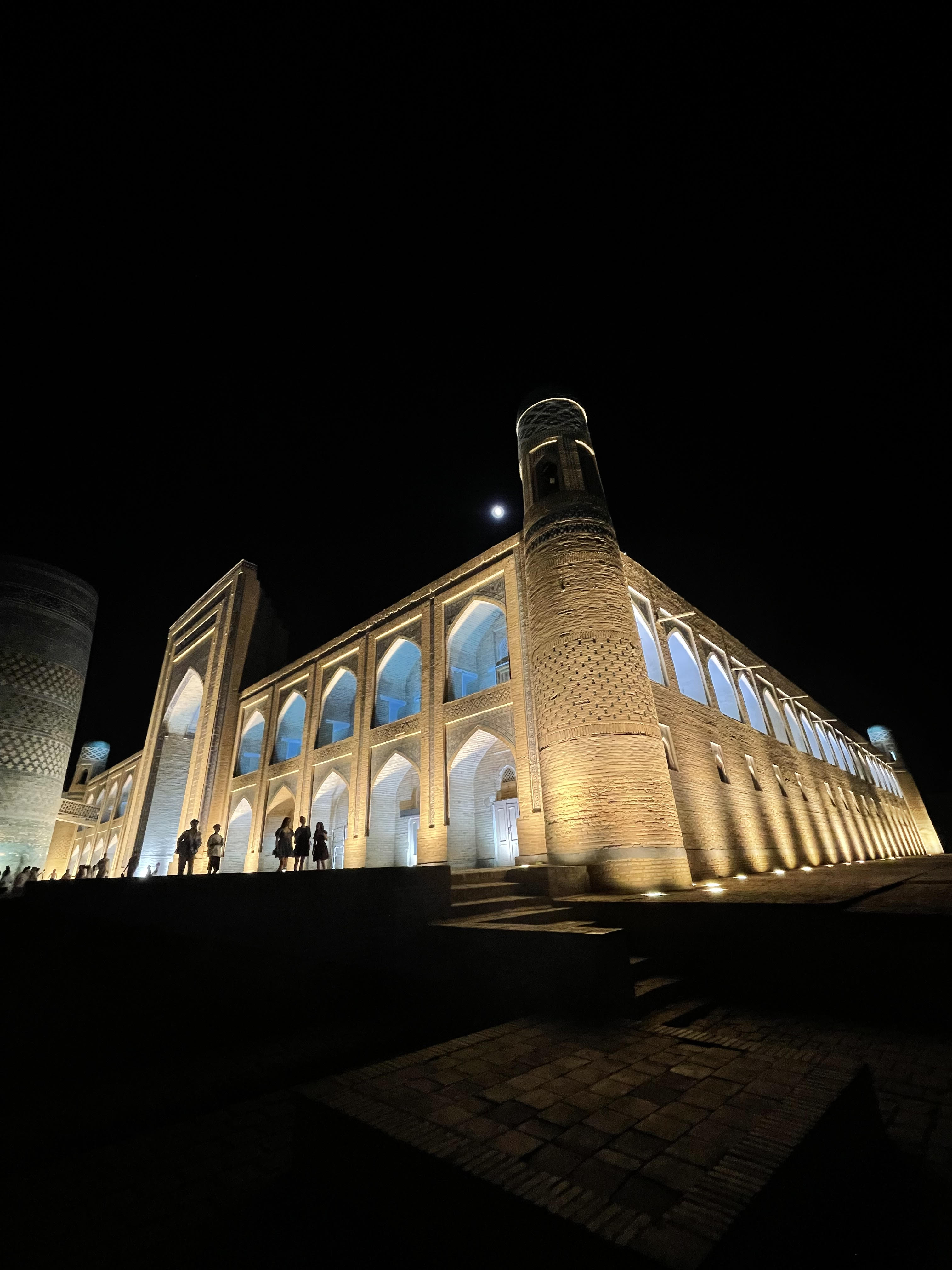
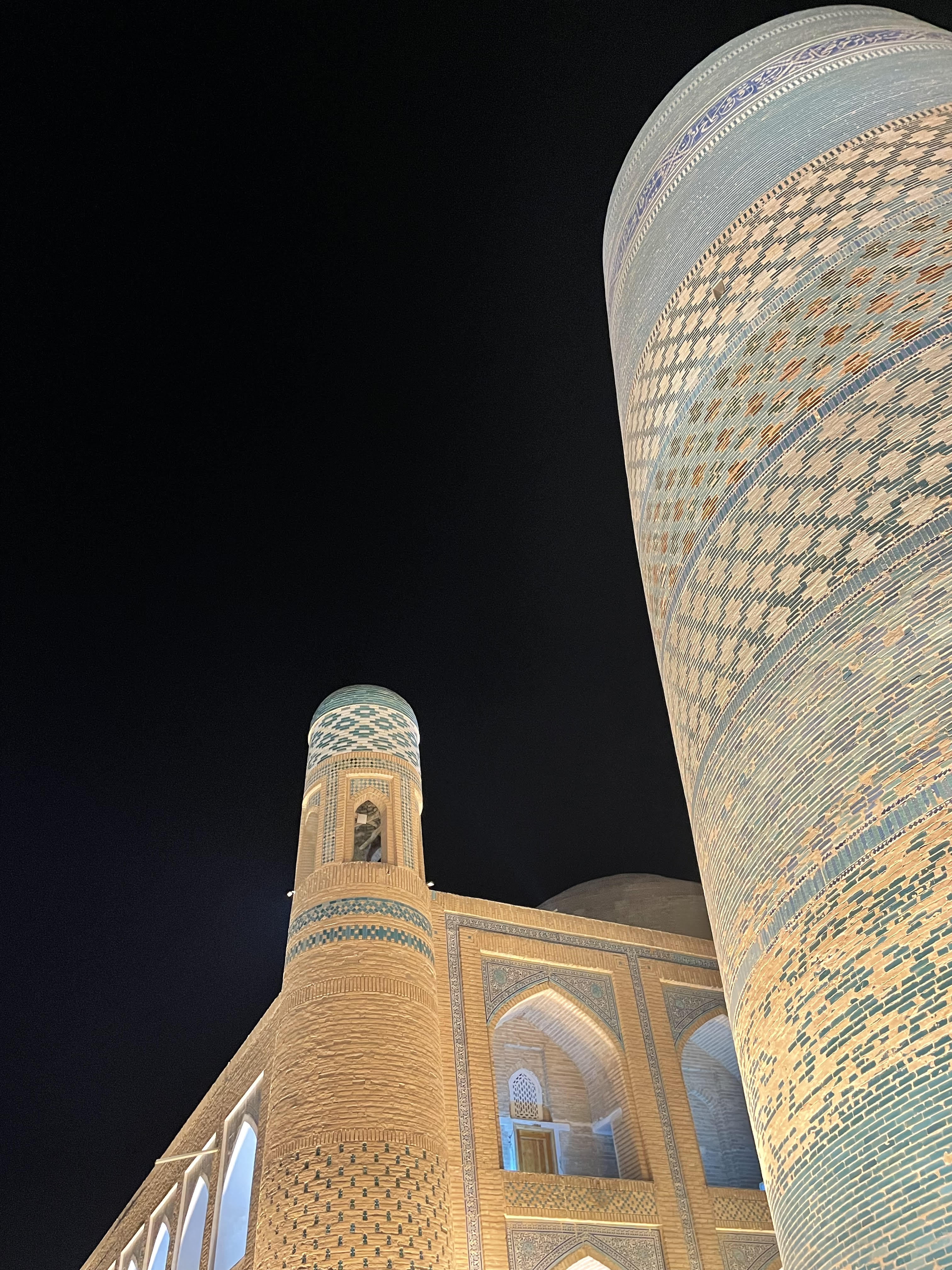
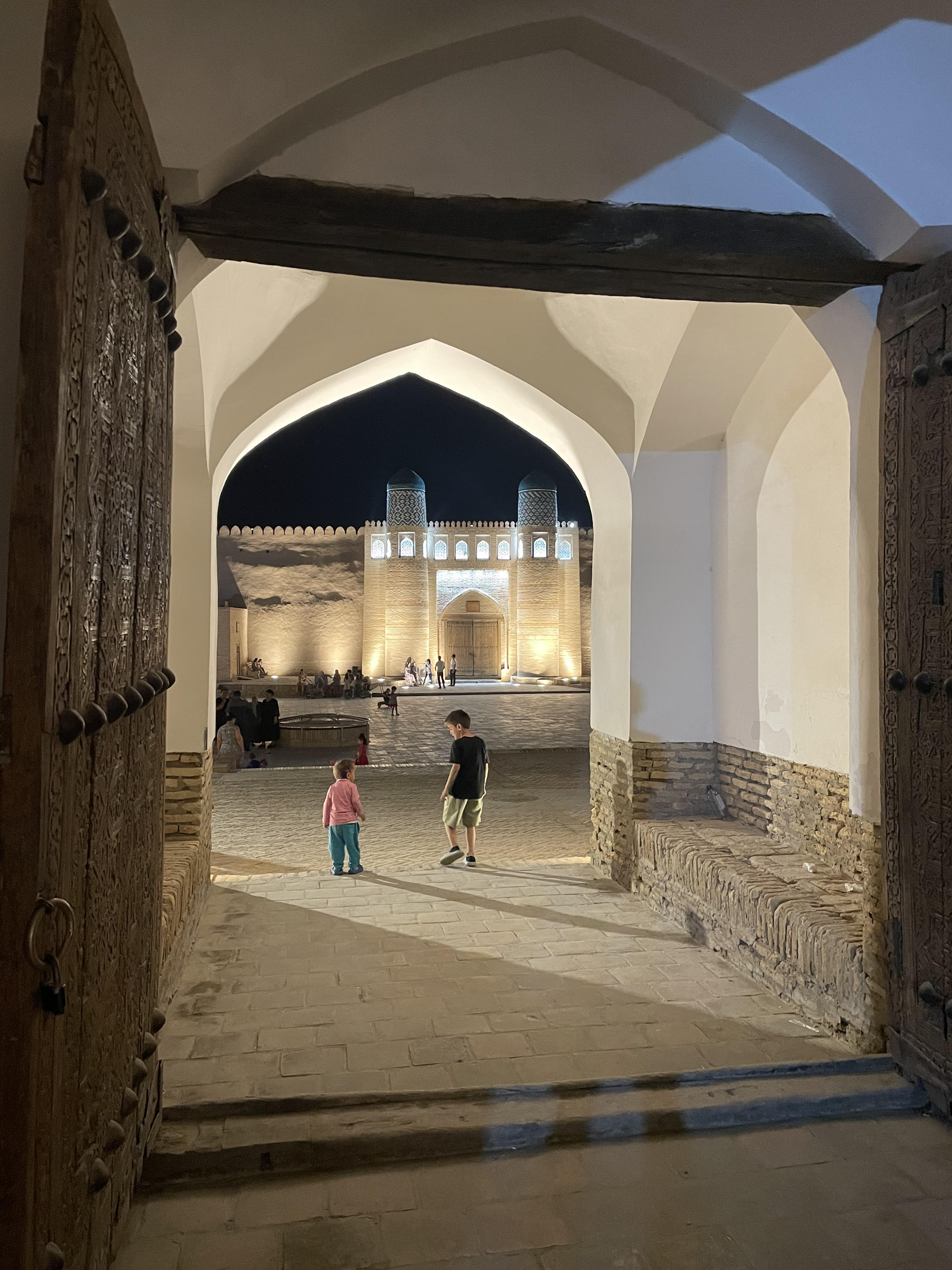
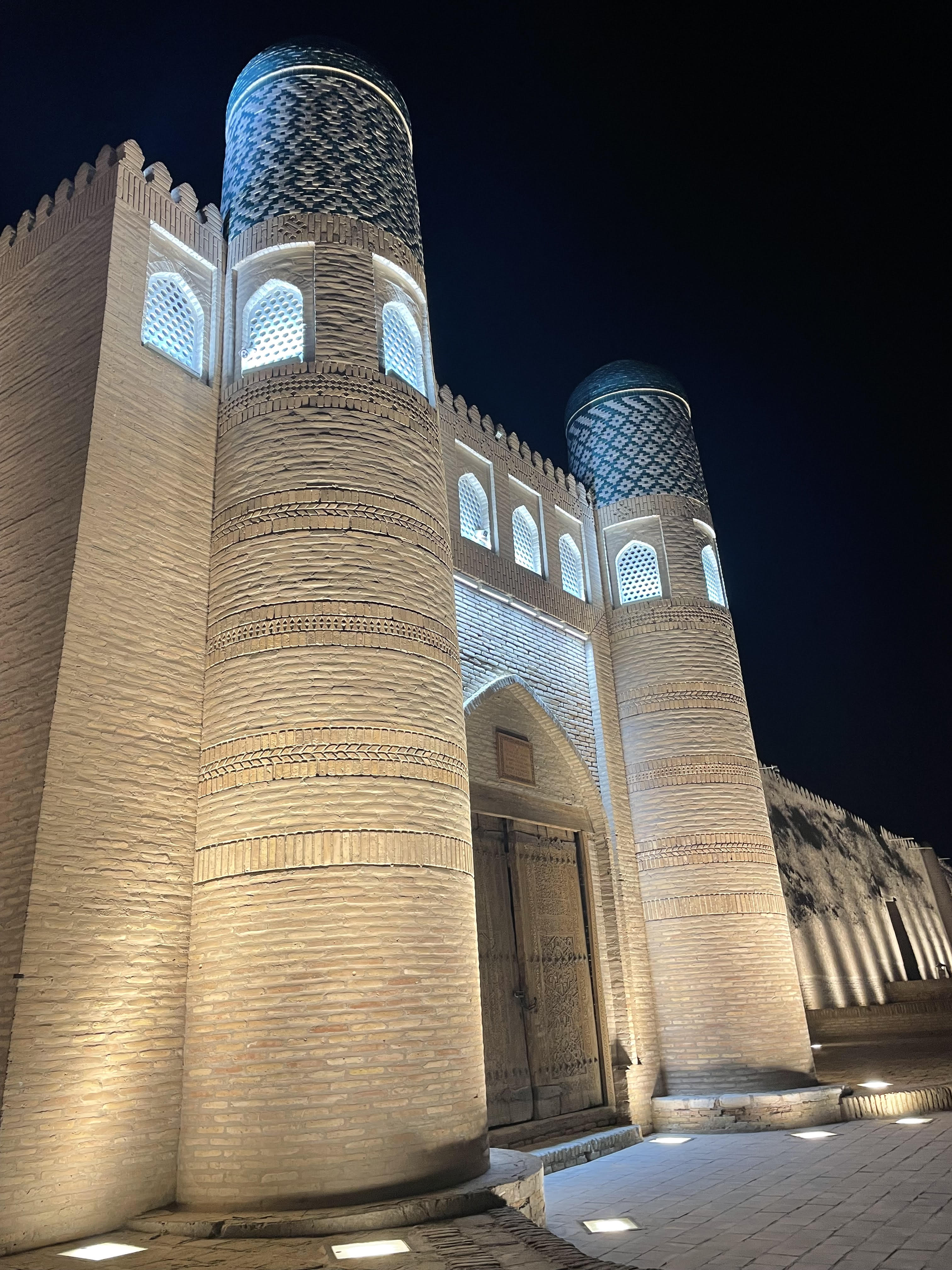
    Reaching the centre of Khiva’s old city several hours later was a sensory delight. After checking into my hotel – a former madrasa, with rooms set back directly from a large central courtyard whose walls and columns are adorned with green and blue islamic tiling that lends the place an air of great grandeur and calmness – and washing myself and my kit, I set out to explore the old city by night. What I encountered was mesmerising.

  • Managing snags and reaching Uzbekistan

    8 May 2025

    When I think about the essence of the challenge of this adventure, my mind doesn’t go just to the physicality of turning the pedals on my bike. It’s a given that riding a fully loaded bicycle thousands of miles across forbidding terrain is going to be demanding; but often it’s what goes on beyond the pure discipline of cycling that characterises how deep I need to dig to succeed.

    To date, this adventure has brought its fair share of extrinsic snags: the closure of the mountain pass in Georgia and the three-day detour it enforced, the refusal of the Azerbaijan Railway authorities to allow me onto the sleeper train from Baku to Balakan with my fully assembled bike, and Uzbekistan’s prolonged closure of its road border crossing from Kazakhstan to name just three fairly significant ones!

    Yesterday, I dealt with another potential snag – an infection that I’d managed to pick up (I suppose while wild camping) in the desert. I’ll spare you the precise details, but I was starting to experience some quite alarming symptoms, and while dealing with pain holds little fear in itself, the possible implications of leaving the issue untreated had become very much a source of worry! A visit to the local hospital in Beyneu yielded a prescription of antibiotics and a much happier state of mind!

    In a more jovial episode earlier in the day, there had been a small hiccup to my pre-departure logistics in Beyneu when I became locked in a supermarket! I was perusing the aisles for supplies (with a distinct lack of urgency given my abundance of available time in the town) when it became clear that the shop had actually shut! All of the staff had relocated to the stock room, from where the triumphant sound of their singing emanated loudly and joyously. Perhaps it had been a particularly good morning for takings? When they emerged, they did so with plates piled high with noodles for a shared lunch. I was able to pay for my shopping, but the door to the street outside had been locked, and the lock became jammed for some time when the staff tried to release me!

    Given the closure (by road) of the Kazakhstan/Uzbekistan border, a major imperative for the continued progress of my adventure has been to catch the train across the border, and specifically to be able to do so with my bike. We’re necessarily an inseparable pair, and the insinuation at the Beyneu railway station ticket office that conveyance of the bike would be at the guard’s discretion had created a frisson for me about the events that would unfold last night as boarding of the train began (flashbacks to corresponding events at Baku last month being still quite haunting).

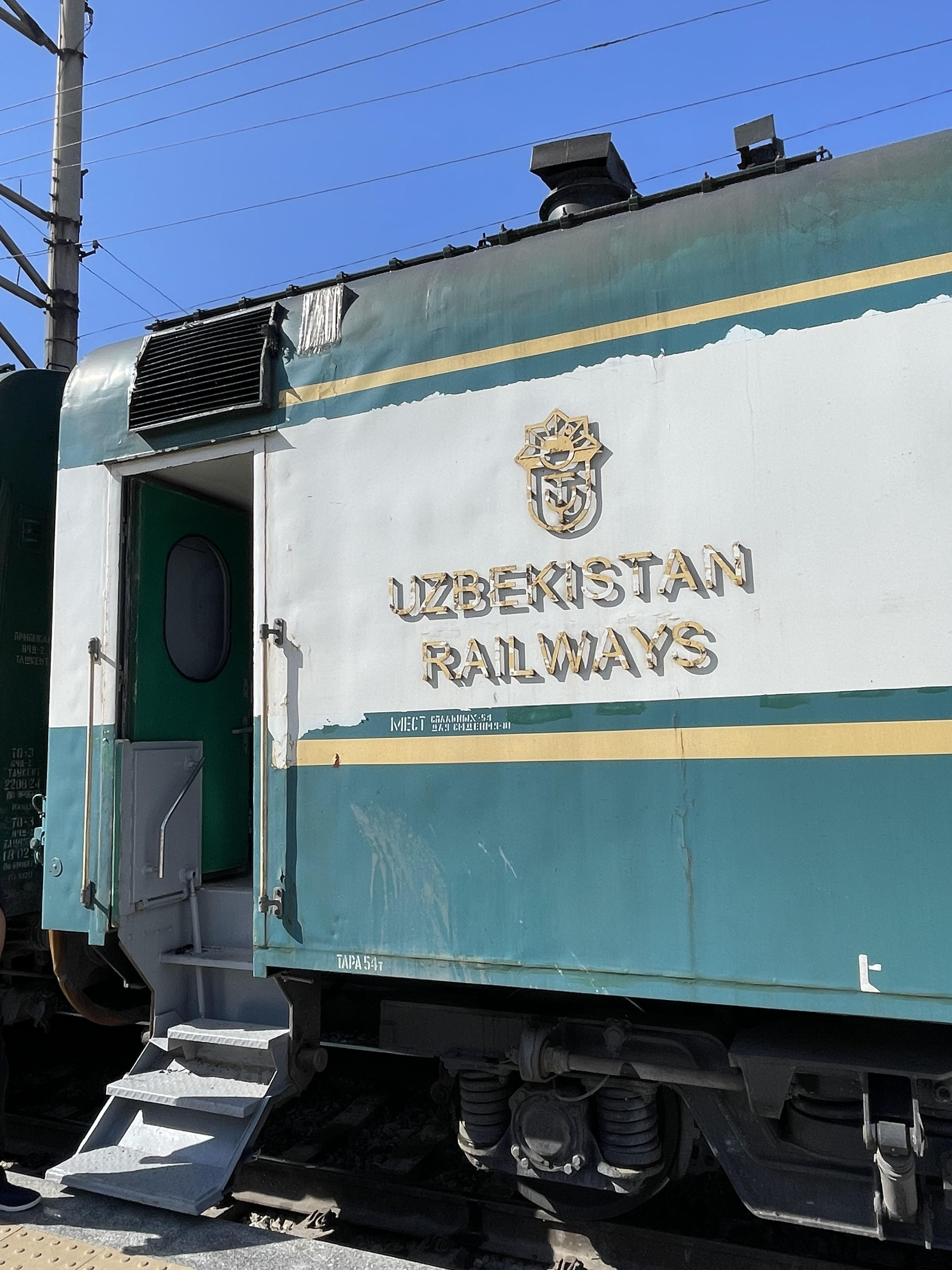
    Train arriving at Beyneu – bound for Nukus and beyond

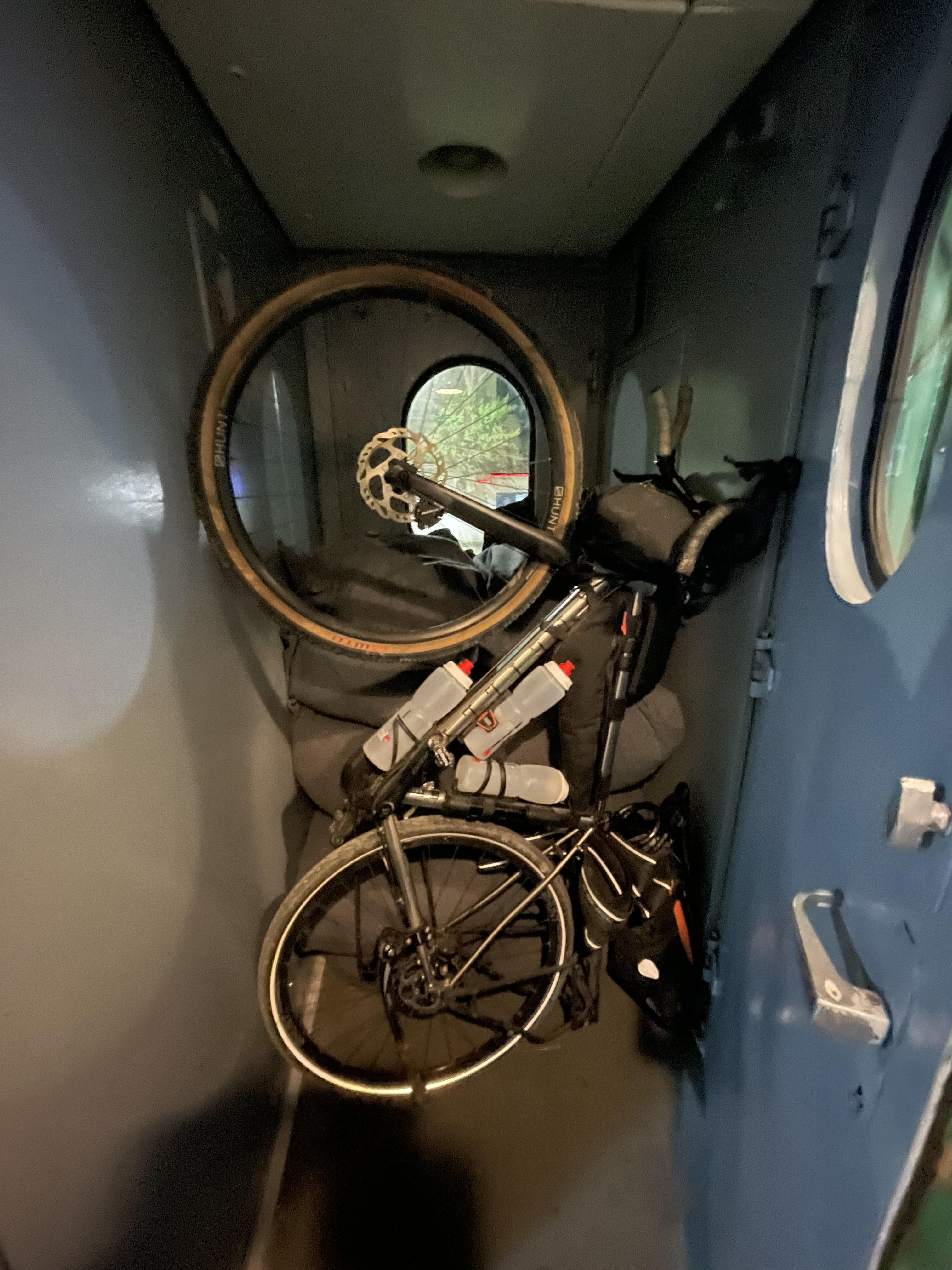
    In reality, the process could not have gone more smoothly. A soldier, who it turned out would oversee the Kazakh half of the night’s passport checks, took me under his wing, liaised with the guard about the best place for my bike to be billeted, and helped me haul it and its cargo up the industrial metal steps to the carriage. Once inside, the guard guided me to a space at the near end of the adjacent carriage, with the bike needing to be upended and rested against some large and full grey (perhaps postal) sacks. My relief was palpable.

    Bike on board!

    The train pulled out of Beyneu station at four minutes past midnight, cementing my gratitude to the town for the three days in which it provided everything I needed to keep my adventure on course, and carrying onwards my dreams into Uzbekistan.

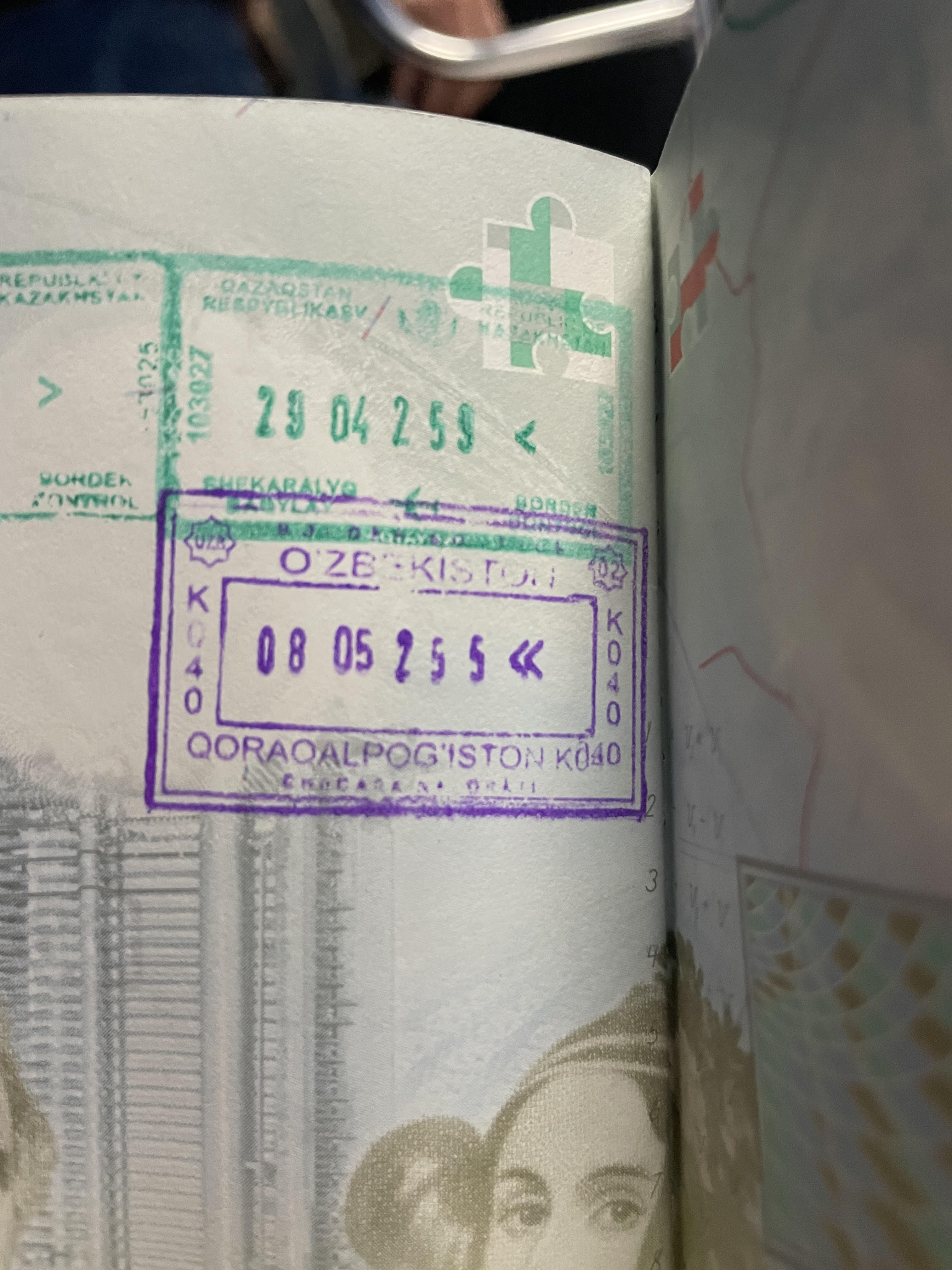
    The Uzbek half of the night’s officialdom overran the allotted time for the train to stand idle by about half an hour at Karakalpakia, with departure being delayed until about 4.30am. As well as doing passport checks, authorities carried out a sweeping search of every nook, cranny and bag on the train, and were satisfied by the explanations I gave them for my fairly large trove of vitamins and supplements!

    Uzbekistan stamp

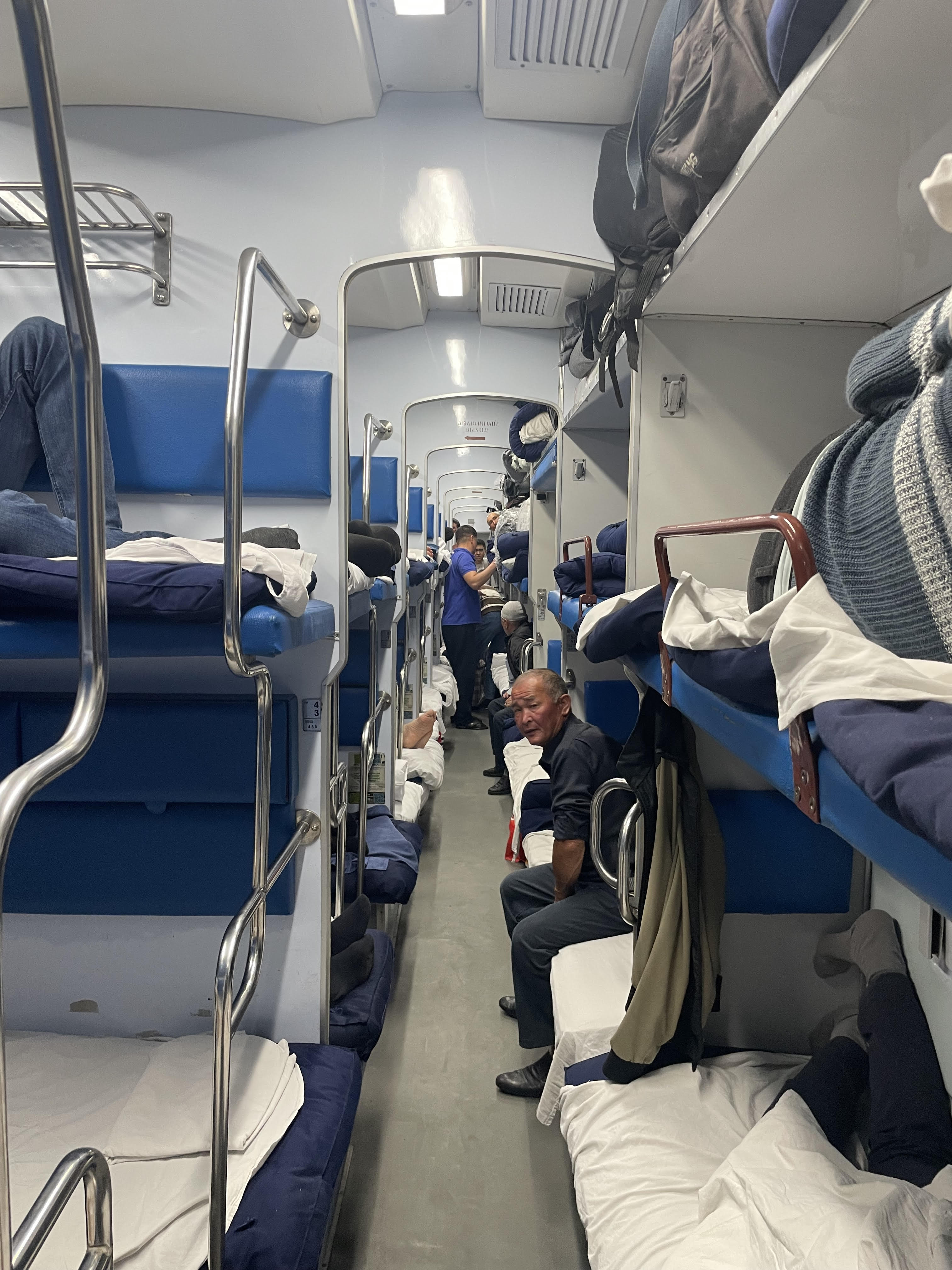
    The rituals of the train are reminiscent of the journey I took with my friend Chris on the Trans-Siberian railway just after the fall of communism in 1992. Although I’m only on board for a relatively short part of its journey (which actually began in Volgograd, Russia, the night before last and will continue until tomorrow night, when it arrives in Tashkent, the Uzbek capital), I feel privileged to be getting a renewed taste of long-distance train travel in the former Soviet Union. The train is packed (a consequence partly, I assume, of the road crossing being closed). There’s a regular flow of passengers making excursions to the samovar stationed at the end of the carriage to make their tea or cook their noodles, and a procession of vendors passing constantly through the train – offering everything from water and food (including some huge and pungent smoked fish) to SIM cards, clothing, children’s toys, beauty products, and a generous currency-exchange service, which I’ve availed myself of!

    Inside my carriage (number 12)

    The train is scheduled to arrive in Nukus in about 45 minutes, and the city will be the launchpad for the next phase of this adventure – my ride across the most famous part of the Uzbekistan Silk Road. 

  • Breaking the chain

    6 May 2025

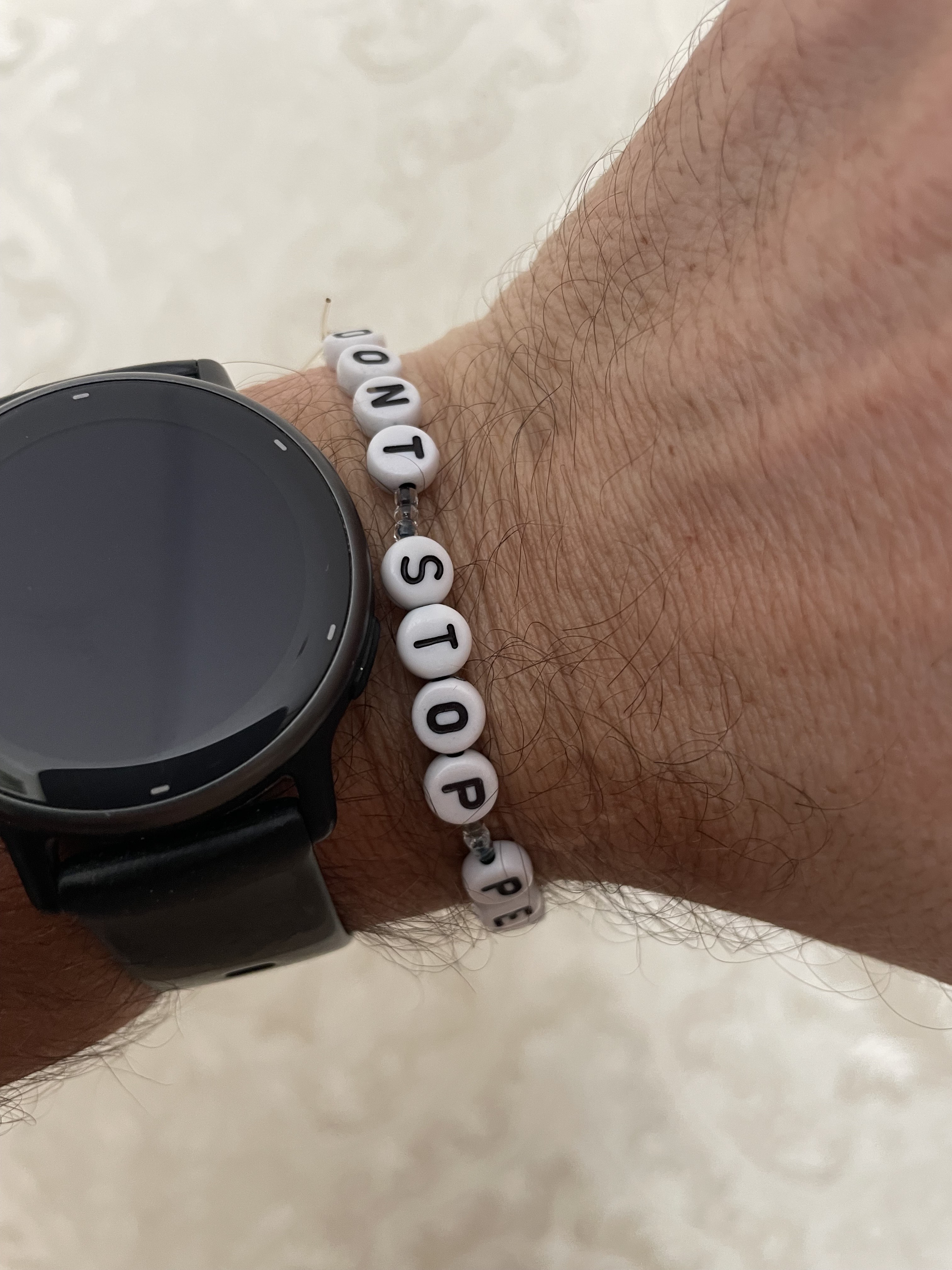
    A couple of days before I set off from home to Turkey to start this adventure, our daughter Eleanor gave me a bracelet she’d made for me. It reads ‘DON’T STOP PEDALLING’ – a reiteration of a beautiful song all three of our children recorded for me when I cycled from home to the top of Mont Ventoux in the south of France (the first leg of this cycling odyssey). I have the song on my phone, but need to find a moment of exceptional mental fortitude to be able to listen to it without a major lip wobble! The bracelet, meanwhile, provides a constant and touching reminder of the children, and I haven’t taken it off since Eleanor fastened it to my wrist.

    Apart from the English Channel and the Caspian Sea, I’ve cycled an unbroken route from home to Beyneu, Kazakhstan – in different legs, but always starting each leg at the point where the previous one ended. Reaching Beyneu has been a journey of 7,187 kilometres (4,466 miles), with 60,102 metres (197,185 feet) of vertical elevation. And for those imploring me not to stop pedalling, I can share that your encouragement drove me to complete just over 1.3 million pedal strokes in getting here!

    Don’t stop pedalling

    The chain of my continuing route now needs to be broken, however, owing to the continued closure of Uzbekistan’s road crossing from Kazakhstan. My research on this before I left the UK was not conclusive, but initial reports suggested that the border would be closed by road for a three-month period from 1 February to 1 May for ‘refurbishment’ (opening just in time for my smooth passage through to Uzbekistan from here in Beyneu). I’d contacted the British embassy in Tashkent to seek clarification, but their response, which managed to confuse the border crossing in question with one some 1,500 miles away, was not reassuring!

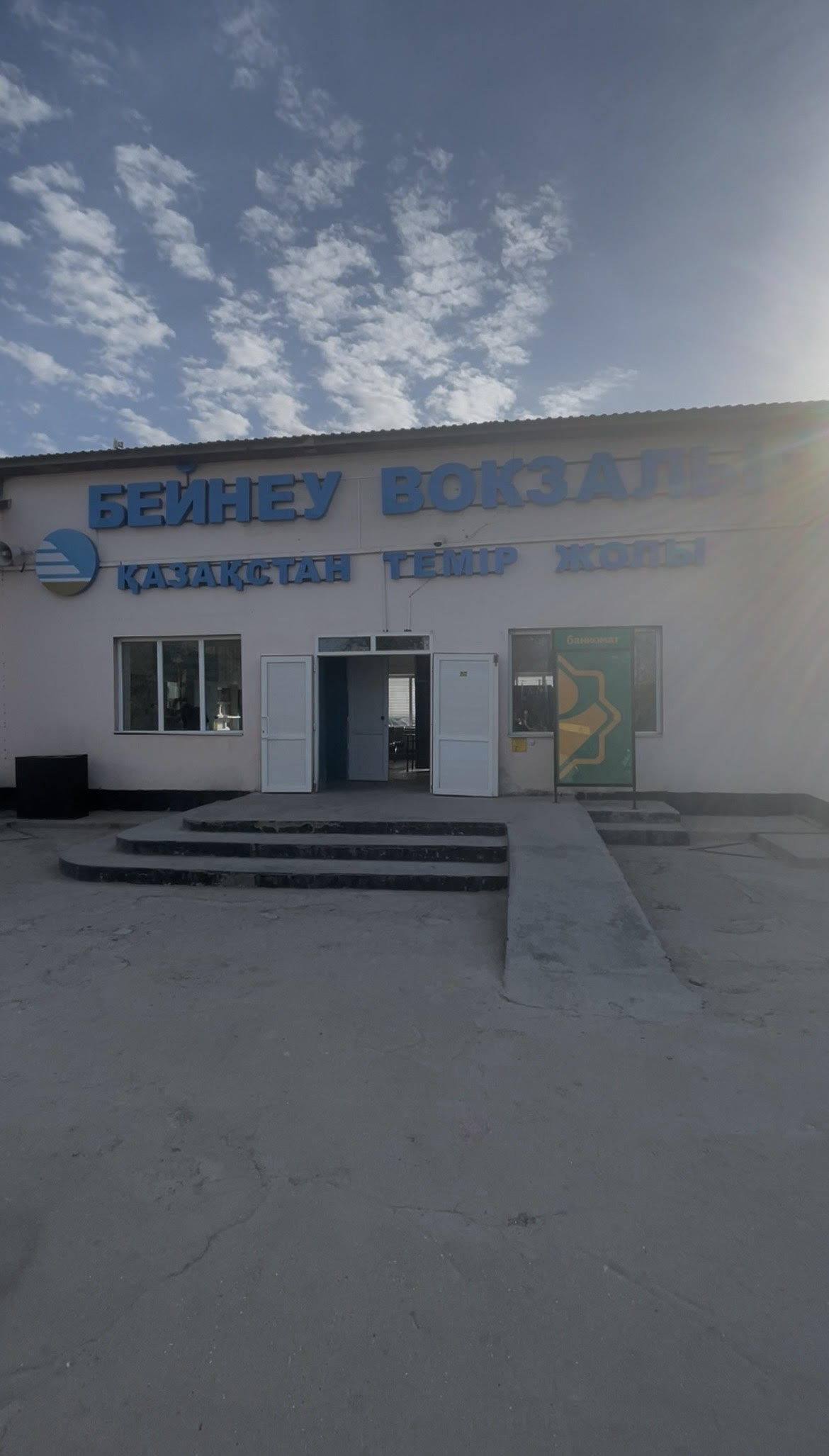
    My back-up plan in case the paint was still drying on the border refurbishments when I got here was to catch a train across the border, with the railway line remaining open during the road crossing closure; and it’s that back-up plan that I’m now activating. Given heavy demand for places on the train route down into Uzbekistan at the moment, I learned when visiting the railway station shortly after arriving in Beyneu that many of the trains are currently fully booked, which has necessitated my enforced three-day sojourn in the town!

    The ticket office at Beyneu railway station

    The replacement of part of my cycling route with a train journey has been difficult for me to countenance. Although it’s driven by circumstances beyond my control, I felt initially very uncomfortable about it and sad that I needed to break the chain of the continuous bike route. But I’ve had two days to adjust to the idea, and have managed to cultivate a more positive perspective! The chain would always have been broken at some point; from Almaty, most obviously, a ride east into the Xinjiang province of China would almost certainly have been unworkable for fairly stark geopolitical reasons. Catching the train (to Nukus) will allow me to continue my ride along the Silk Road through Uzbekistan – a key highlight of this adventure – and I’m determined to enjoy the quirks of fate that will get me there. As foolish as it may sound, I’m not always very good at prioritsing enjoyment over a slavish adherence to the ‘mission’. I have an opportunity here to work on that!

    Beyneu has surprised me in a good way. No doubt a large measure of the contentment I’ve felt here has come from the blessing of meeting Bijou, a fellow cyclist who has also ridden here from the UK. Before he headed south to Nukus on a train yesterday afternoon, we enjoyed each other’s company over a delicious dinner (of dumpling broth and lamb and potatoes) and brunch the following morning. It was great to chat about our respective ambitions and plans, and I hope very much that we might be able to regroup along the Silk Road at some point!

    Kindred spirits!

    With Bijou gone, I’m all too conscious of the always-looming threat of intense loneliness. For all the training and planning that goes into making an adventure like this work, it’s not easy to train for the sense of isolation, and it can strike at any moment. I miss the people I love a lot, and it can be stiflingly introspective to have to process all of my thoughts and apprehensions without recourse to the in-person conversations that are usually so effective in aminating life and putting troubles to rights.

    For now, I’m grateful for Beyneu, and for the relative comforts and kindness I’ve found here. Arriving in the town reminds me of the feeling I had when arriving with my good friend Chris on the Trans-Siberian Railway in Beijing many years ago. That railway journey was one of the highlights of my life, but following the monochrome whiteness of a Siberian February, I remember finding the colours of the market stalls in the Chinese capital incredibly enticing. After the pervasive yellow hue of the desert that I grew accustomed to over the four days of cycling from Aktau to here, the buzz of life and the abundance of fresh food in Beyneu is similarly sustaining!

1 2 3
Next Page→

Blog at WordPress.com.


Loading Comments...
 

    • Subscribe Subscribed
      • A bike ride around the world
      • Already have a WordPress.com account? Log in now.
      • A bike ride around the world
      • Subscribe Subscribed
      • Sign up
      • Log in
      • Report this content
      • View site in Reader
      • Manage subscriptions
      • Collapse this bar