I arrived safely in Beyneu yesterday afternoon after four days’ cycling through the desert of the Mangystau region of south-west Kazakhstan. Four epic days, whose memories I’m sure are going to take some time to fully settle in my consciousness. But I thought I’d share some perspectives while fresh in my mind.
I cycled out of Aktau on Thursday morning with a real sense of trepidation – riding initially between the Caspian Sea on my right and the sprawling manifestation of the rich oil and gas industries to my left, but fairly rapidly leaving that corridor behind and heading out into the desert. I was as prepared as I could be – carrying nine litres of water (six of them in a DromLite water ‘bladder’), plenty of food to sustain me, and all the kit I needed to wild camp as and when that became necessary. But I felt alone and truly vulnerable. It’s an act of great faith to set off on a bike into such wilderness. Faith in my capacity to ride it, but faith too in humanity and its preparedness to enable such an adventure.
Day one went smoothly, and I covered just under 100 miles to Shetpe. The ride took me out east alongside the Karagiye Depression – which falls to a depth of 132 metres below sea level (the deepest depression in Asia and the lowest point in Kazakhstan), before turning north at Zhetybay.
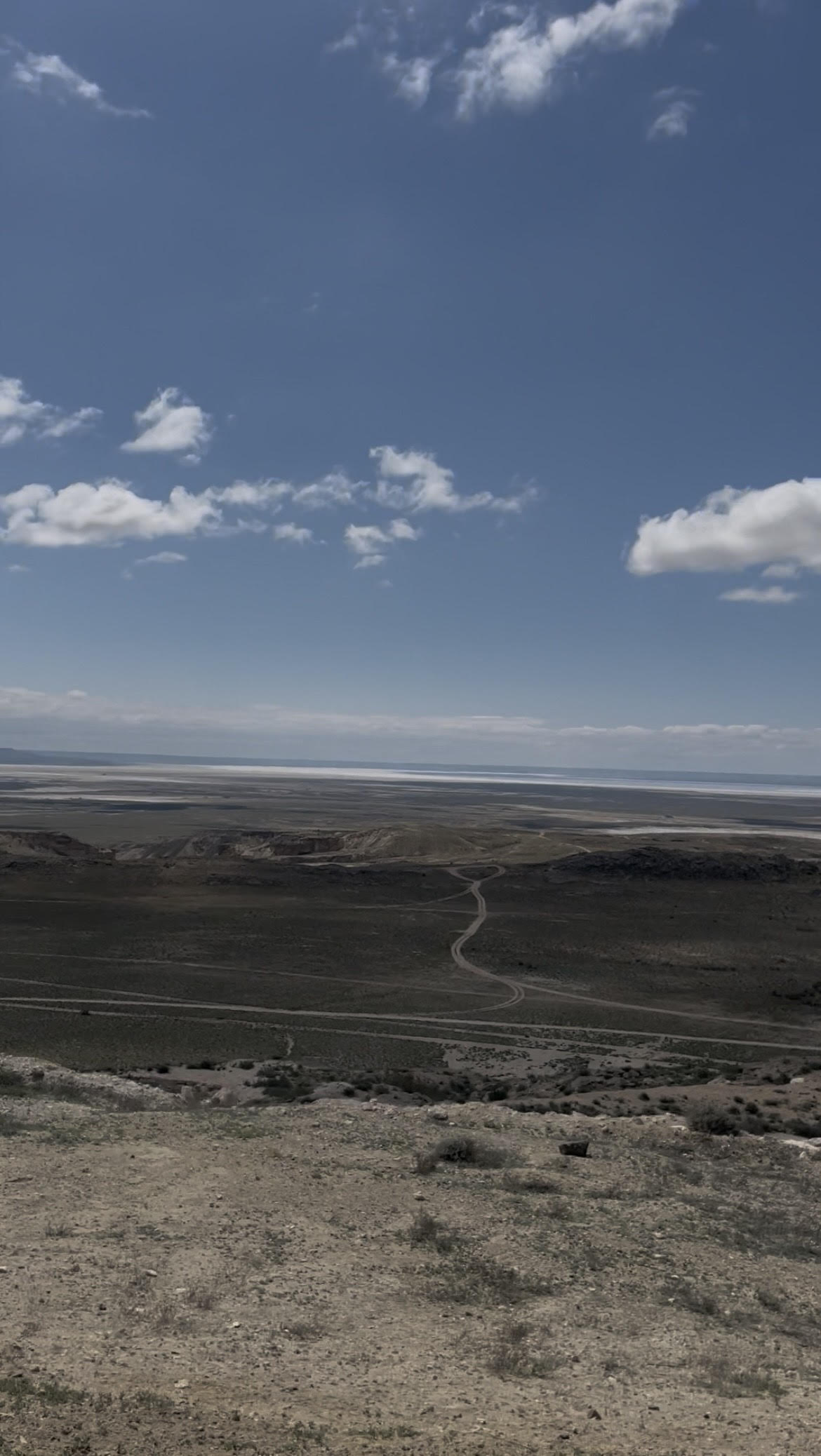
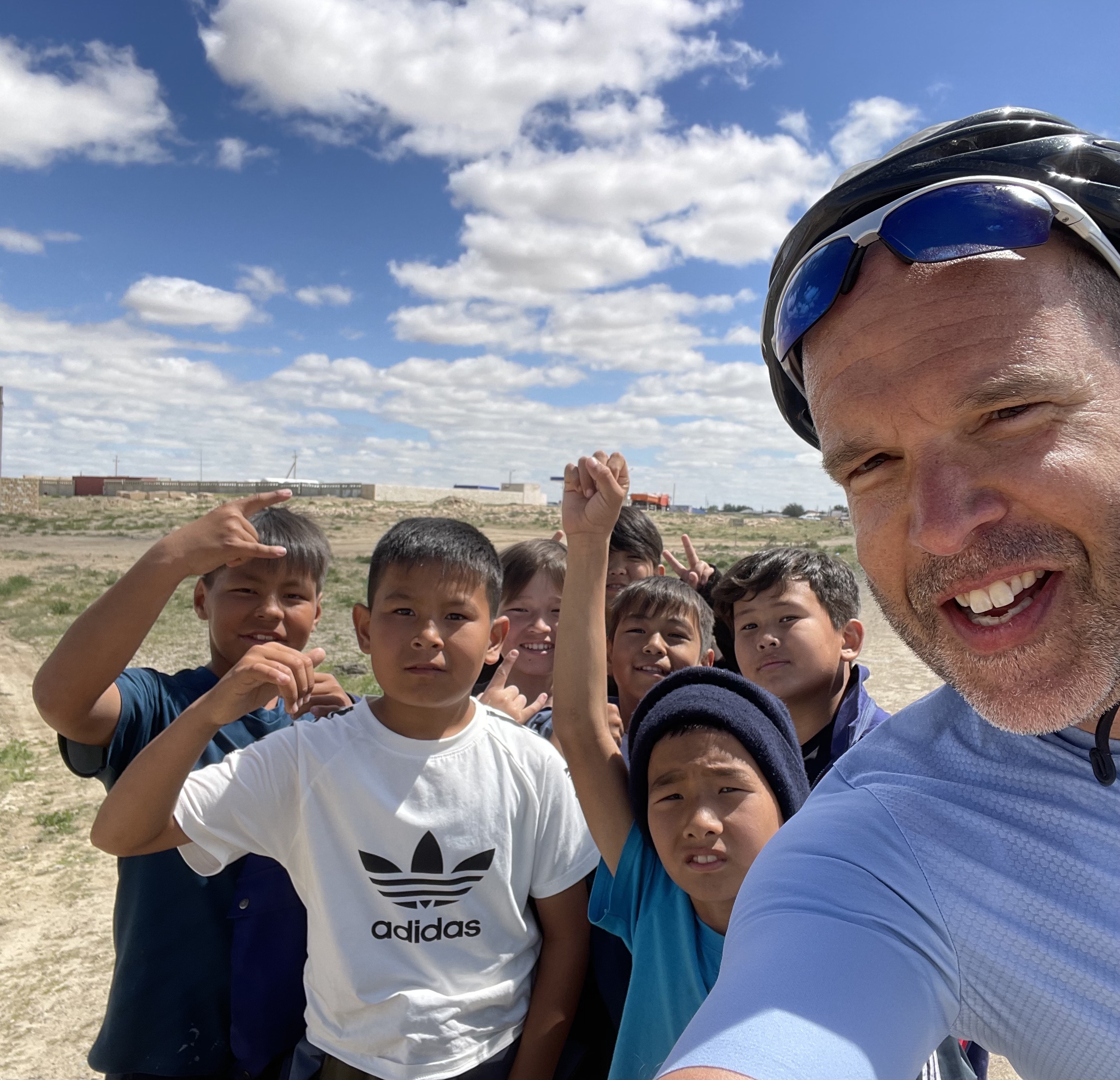
There was little drama for the rest of the day, but a moment of serendipity when an enforced stop to retrieve my water bladder (which was thankfully undamaged despite breaking free from its mooring on the bike and crashing to the road) bought some time for a group of boys (aged about 12) from the local village school to make their way to me across the sand. Mansur was the first to introduce himself, and the boys were a delight. So engaged and respectful. Their smiles and enthusiasm gave me as much fuel as any food could have done in that moment.
I’d known there was a motel in Shetpe where I could probably get a bed for the night, and so it transpired. I was grateful for a shower (albeit an icy cold one) and the chance to replenish my water supplies.
In the morning, day two began ominously, with a powerful cross-wind making its presence felt as soon as I headed out on the road towards Say-Otes, and before long it turned into a pitiless headwind. The conditions were farcically difficult (it’s never encouraging to see that you’re travelling at about five miles an hour downhill!), and at times there was no choice but to get off the bike and push it into the wind (with even that sometimes proving incredibly challenging). Strong and persistent winds are a defining characteristic of the Mangystau region, and they were a highly defining feature of my second day in the desert.
It took me almost ten hours to ride just 55 miles, and by the time I unclipped from the pedals (on reasoning that I’d found the best spot I could for my first night wild camping) I was exhausted. I’d got through most of my electrolyte-enriched water supplies along the way (a temperature of 32c barely noticeable given the extremity of the wind, but no doubt drawing vast amounts of moisture from my skin surreptitiously throughout the day!), and I was incredibly grateful to the family who thought nothing of giving me their water to top me up when I asked for their help.
Pitching the tent when so tired and with the prospect that it would take flight on the gusty wind wasn’t easy, but I felt a huge sense of satisfaction in getting it pegged to the ground and ready to envelop for me for some much-needed sleep.
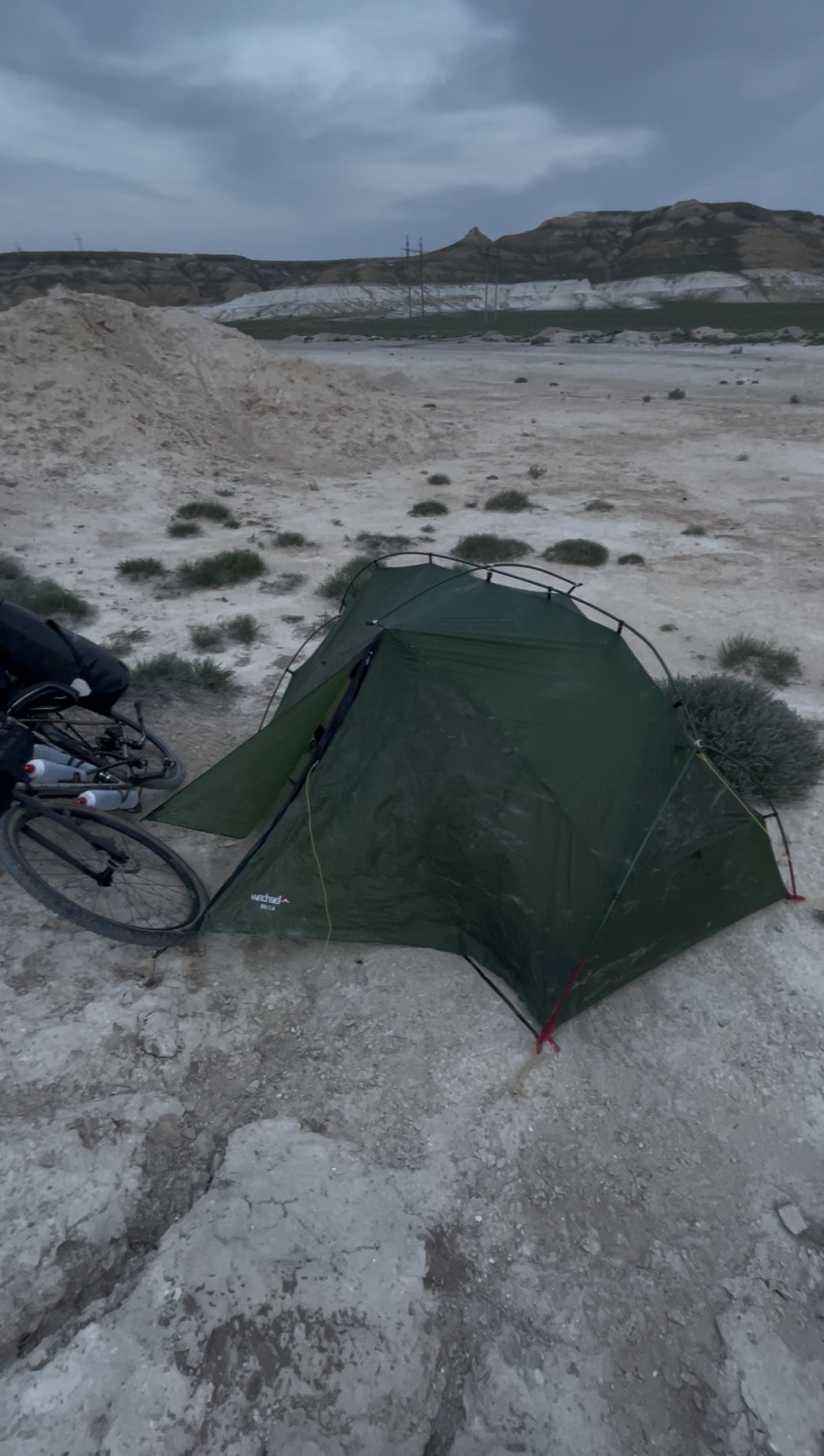
When I woke up, after a surprisingly full night’s sleep, I was amused to see that the floor of my tent had been coated during the night in a thin layer of white sand. I’d zipped up fully for the night, but the pores of the air vent had obviously given enough aperture for the tiny grains of sand to make their way in.
Day three was breezy, but eminently rideable, and I covered about 90 miles before finding another spot to wild camp. The journey took me on a slight detour into Say-Otes to top up my depleted supplies of water, and another chance meeting with a group of boys from the village who wanted to know what I was doing and took a keen interest in all aspects of my bike and its set-up.
The desert felt relentless, with scenery that changed little for hour upon hour along arrow straight roads that pierced a pancake-flat landscape of sand and desert brush. I cycled all day under the beating sun (the tallest growing thing being no more than a couple of feet off the ground and providing no shade). The bus shelters that cropped up every 30 or 40 kilometres provided the only potential refuge, but for the most part I was happy to keep pedalling through the vastness of the landscape. Perhaps riding with Thomas (our oldest) through the plains of western Turkey last June, when the temperature had peaked at about 45c, gave me the confidence to know that I could cope!
Life in such desolate conditions can be a rare thing to detect, and at times it felt like I had only beetles and lizards for company. The latter, with their exaggerated reaction to the sight and sound of my bike, appeared to take on almost human guises at points, but perhaps such anthropomorphism is just the imagining of a lonely cyclist on a fast-track towards hallucination!
Occasionally, I encountered desert voles, who’d shoot out across the road at lightning pace, and most excitingly caravans of Bactrian camels and herds of wild horses. I initiated conversations with most of them, but the camels looked especially puzzled by my presence!
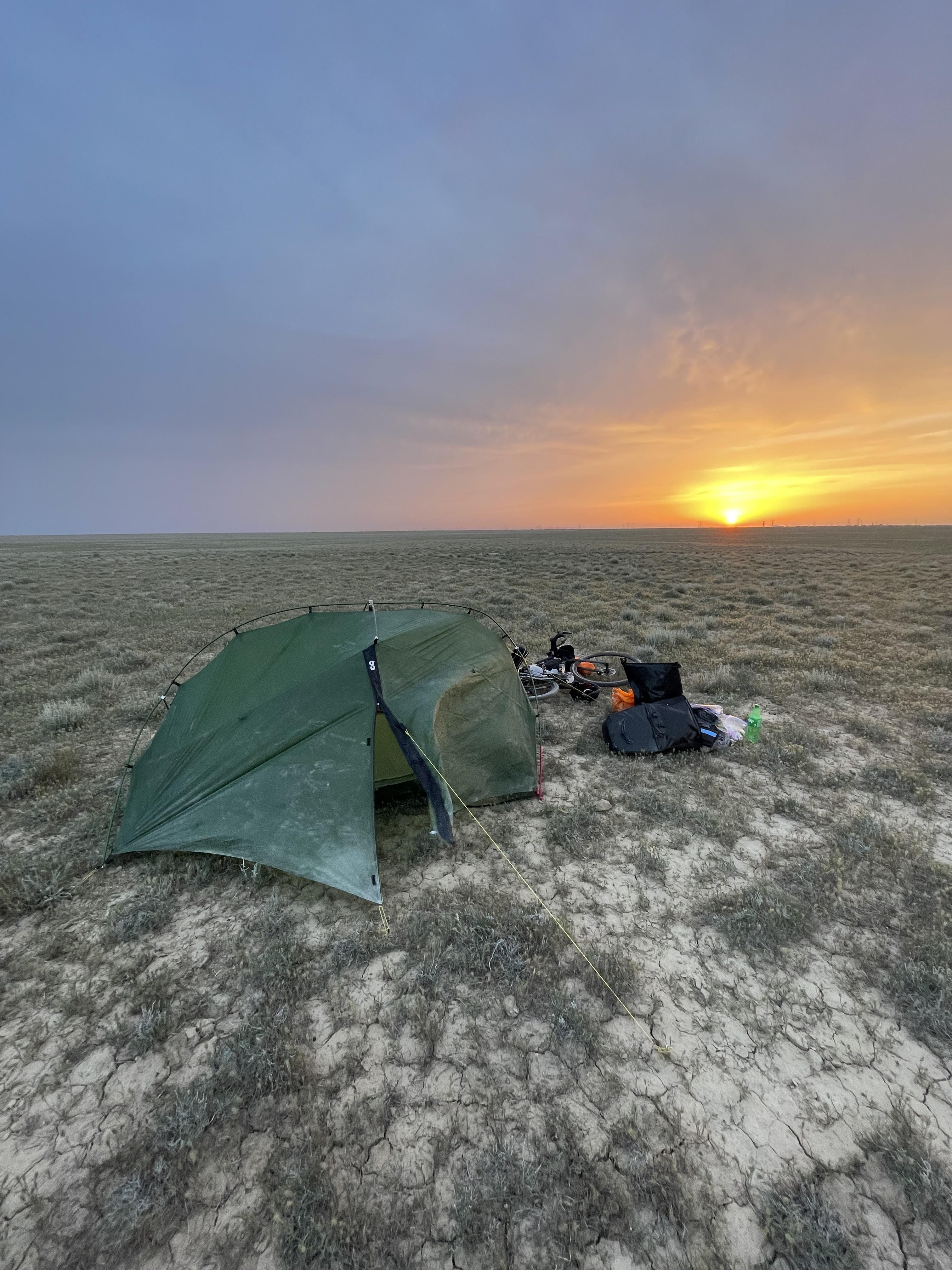
The end to day three pitched me deep in the desert, about 52 miles from Beyneu. I rode my bike discreetly for about half a mile away from the road – the land being so flat that any closer would have advertised my presence more visibly than I was comfortable with. I put up my tent, rewarded my day’s efforts with a tin of tuna and a tortilla wrap, and marvelled at the beauty of the sunset and the sheer majesty of the desert.
Day four was more desert graft – softened, as during the previous three days of the ride from Aktau, by the numerous acts of kindness that peppered my ride. A couple of men stopped to check I was ok and thrust literally their entire collection of food at me, and there were endless offers of water from car, van and lorry drivers who pulled over to see how they could help me.
Support has continued to come too from the regular hooting of horns, waves and fist clenches. It’s been amazing, and so often the motivation that makes the rough times a little smoother.






 A bike ride around the world